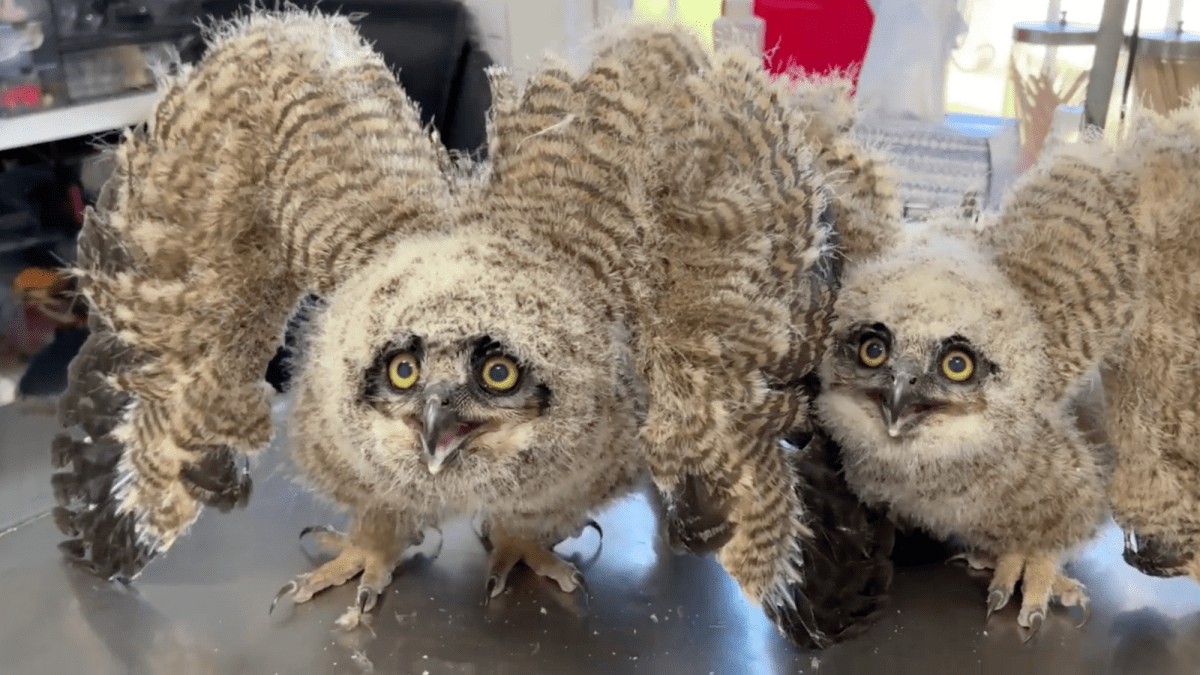
Two great-horned owl chicks recently received a quick check-up at the Stanislaus Wildlife Care Center in California after being found on a local soccer field. While seemingly out of place, their presence there wasn’t necessarily a sign of distress. Young owls often leave the nest before they are fully capable of flight, with their parents continuing to provide care on the ground. This is normal, provided the birds are in a safe environment.
Assessing the Birds’ Condition
The center’s team conducted a “hands-off” exam, meaning they observed the owls’ behavior without physically intervening. This method allows veterinarians to assess an animal’s health based on how it stands, walks, and reacts. One owl was already standing comfortably, while the other was in a typical “hock sitting” position – resting on its legs, which is common for young owls. Both birds exhibited threat displays, snapping their beaks and spreading their wings, a clear indication they were not injured or overly stressed. Their eyes showed a normal level of cloudiness for their age, and they blinked using a characteristic upper eyelid lowering.
Great-Horned Owls: Early Arrivals Each Year
Great-horned owls are among North America’s largest, weighing up to 4.5 pounds. The Stanislaus Wildlife Care Center sees these chicks arrive early in the season every year. Owl courtship begins in November, leading to egg-laying in late January or February, with hatching occurring in March or April. These birds grow rapidly, reaching adult size in just ten weeks, but remain dependent on their parents until fall. The center prefers to raise orphaned chicks with non-releasable surrogate owls, allowing them to develop normal behaviors more effectively than hand-feeding.
What To Do If You Find Young Owls
The center advises leaving healthy-looking owl chicks alone if found on the ground. If a bird appears injured or sick, contact local animal control or a wildlife rescue center. The two owls examined are now in aviaries, where they will continue to develop their flight skills before eventual release.
Ultimately, these owls serve as a reminder that wildlife sometimes appears in unexpected places, and that observation before intervention is often the best course of action.