


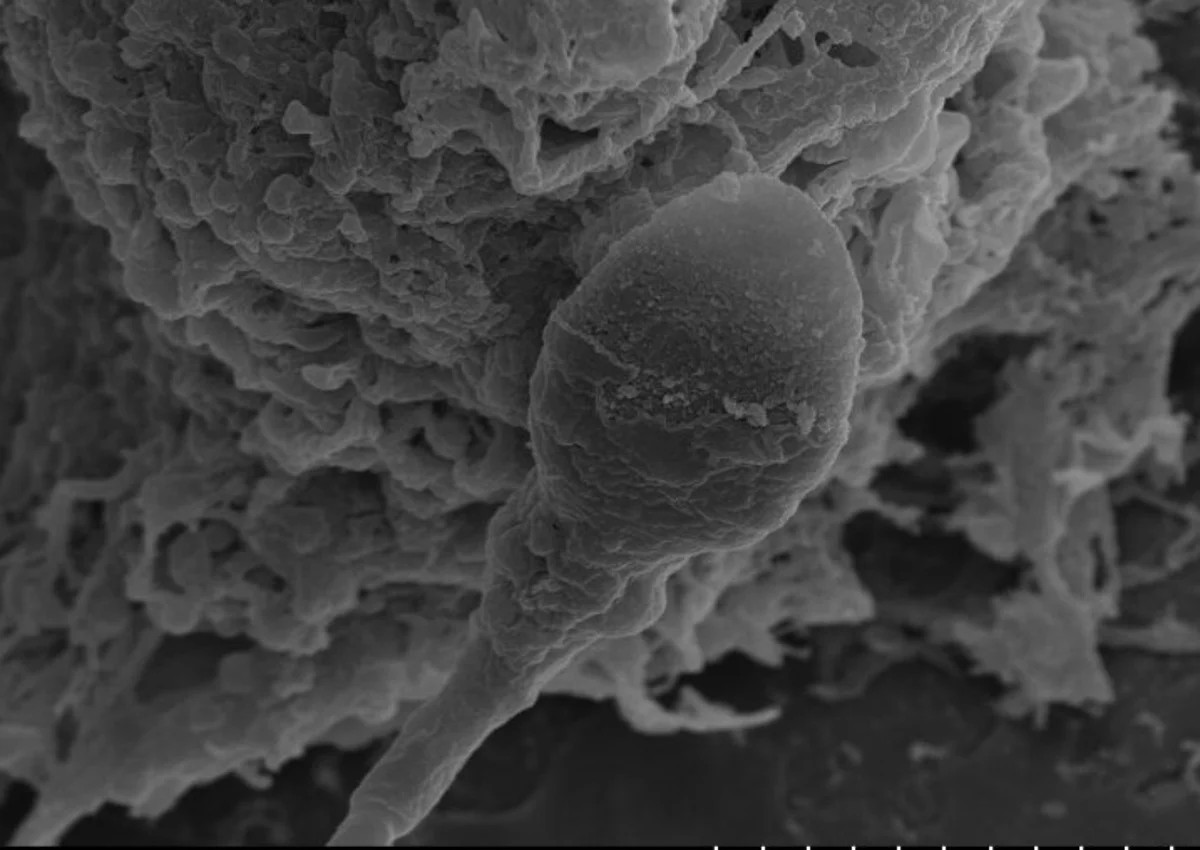
Human sperm cells may not function as expected in the weightlessness of space, raising questions about future long-term space missions and the possibility of reproduction beyond Earth. A new study published in Communications Biology reveals that sperm struggle with directional navigation in microgravity, potentially reducing fertilization rates. This isn’t just a scientific curiosity; as space travel becomes more ambitious, understanding human reproduction in these conditions is becoming critical.
Microgravity Impairs Sperm Navigation
Researchers at Adelaide University in Australia simulated the female reproductive tract under microgravity conditions, mirroring those found in space. The results were clear: sperm exhibited “impaired directional navigation” in the absence of normal gravity. Unlike on Earth, where gravity assists sperm in swimming toward the egg, microgravity disorients them.
This disorientation isn’t theoretical. When tested with mouse eggs, microgravity conditions led to a 30% decline in fertilization rates over a four-hour period compared to Earth-based controls. The implication is that successful reproduction could be significantly harder in space without intervention.
Progesterone as a Potential Solution?
The study also explored whether hormonal cues could help sperm reorient themselves. Adding progesterone, a hormone naturally released by eggs to attract sperm, to the simulation chamber did improve sperm navigation in microgravity. Progesterone acts as a “biological homing beacon,” guiding sperm toward the egg through specialized receptors.
However, the concentrations of progesterone needed to achieve this effect were “considerably higher” than those found naturally in the human body. This suggests that while the hormone may offer a pathway forward, a simple fix for space fertility isn’t yet available. The research doesn’t suggest a quick solution for space pregnancy, but it does point towards a fruitful avenue for future investigations.
Why This Matters
The study highlights a practical problem facing long-duration space missions. As humanity aims to establish permanent settlements on the Moon and Mars, the ability to reproduce beyond Earth becomes essential. Humanity cannot rely on resupply for generations; we must be able to sustain ourselves, including by reproducing, in space.
“As missions to the moon and Mars move from aspiration to reality, understanding whether humans and the species we depend on can successfully reproduce in those environments is not a curiosity; it is a necessity,” says Nicole McPherson, senior author of the study.
This research underscores the need for further study into how microgravity affects not only sperm but also eggs, embryos, and the overall reproductive process. While sex in space remains unconfirmed, the question of whether it’s possible is quickly shifting from hypothetical to urgent.


