


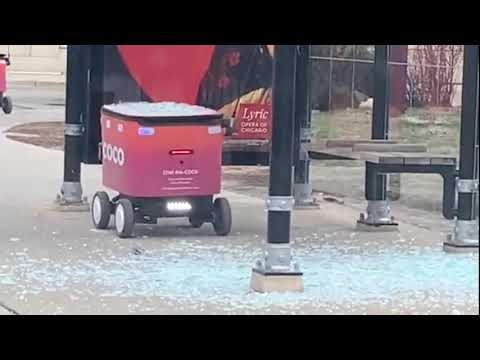
Autonomous food delivery robots are increasingly colliding with infrastructure in Chicago, raising safety concerns and sparking backlash from residents and lawmakers. Within a 48-hour period, two separate incidents involved robots from Serve Robotics and Coco Robotics crashing into bus shelters, shattering glass and alarming bystanders. These crashes highlight the challenges of deploying autonomous technology in urban environments and fuel the debate over their presence on public streets.
The Incidents: “Kool-Aid Man Style” Collisions
On March 23, a Serve Robotics delivery robot in Chicago’s West Town neighborhood veered off course and smashed into a bus shelter, breaking through the glass barrier. Videos circulating on social media show the robot continuing forward before backing up, leaving broken glass in its wake. The following day, a Coco Robotics device crashed into another bus shelter in Old Town, stopping only after bursting through the structure. Witnesses reported hearing a loud noise and seeing the wrecked robot at the scene.
Neither company has yet fully explained the causes of these collisions, though both have dispatched crews to clean up the debris. Serve Robotics stated it is reviewing the incident and “in contact with local stakeholders.” Coco Robotics VP Carl Hansen acknowledged the crash but called it “not representative of typical operations,” adding that this was the first such collision in over one million miles of deliveries.
Navigation System Under Scrutiny: Pokémon Go Data?
The crashes occur shortly after Coco Robotics announced it would begin using a new Visual Positioning System (VPS) from Niantic Spatial to improve navigation accuracy. This system relies on images collected in part from millions of “Pokémon Go” players to help robots determine their location in areas with unreliable GPS. Some observers speculate that the new mapping system may have contributed to the incidents, though Coco Robotics maintains that the crashes were not related to geolocation.
The reliance on gaming data for navigation underscores the experimental nature of this technology and the potential risks of deploying it without adequate testing.
A Bumpy Rollout: Robots Struggle in the Real World
These bus shelter crashes are part of a larger pattern of incidents involving delivery robots across the country. Videos and reports show robots getting lost, bumping into obstacles, and struggling in adverse weather conditions, including submersion in floodwaters and getting stuck in snow.
In Chicago, the issue has become frequent enough for the city to establish a dedicated category on its 311 complaint system for robot-related safety concerns. Alderman Daniel La Spata has temporarily banned Serve and Coco from operating in his ward, and a petition with over 3,600 signatures calls for a citywide ban.
The incidents underscore the limitations of current autonomous technology in complex urban environments. While companies emphasize low speeds and safety features, the reality is that these robots are still prone to errors that can damage public property and alarm residents.
The deployment of delivery robots continues to be a contentious issue, with growing public opposition raising questions about whether the benefits outweigh the risks.


