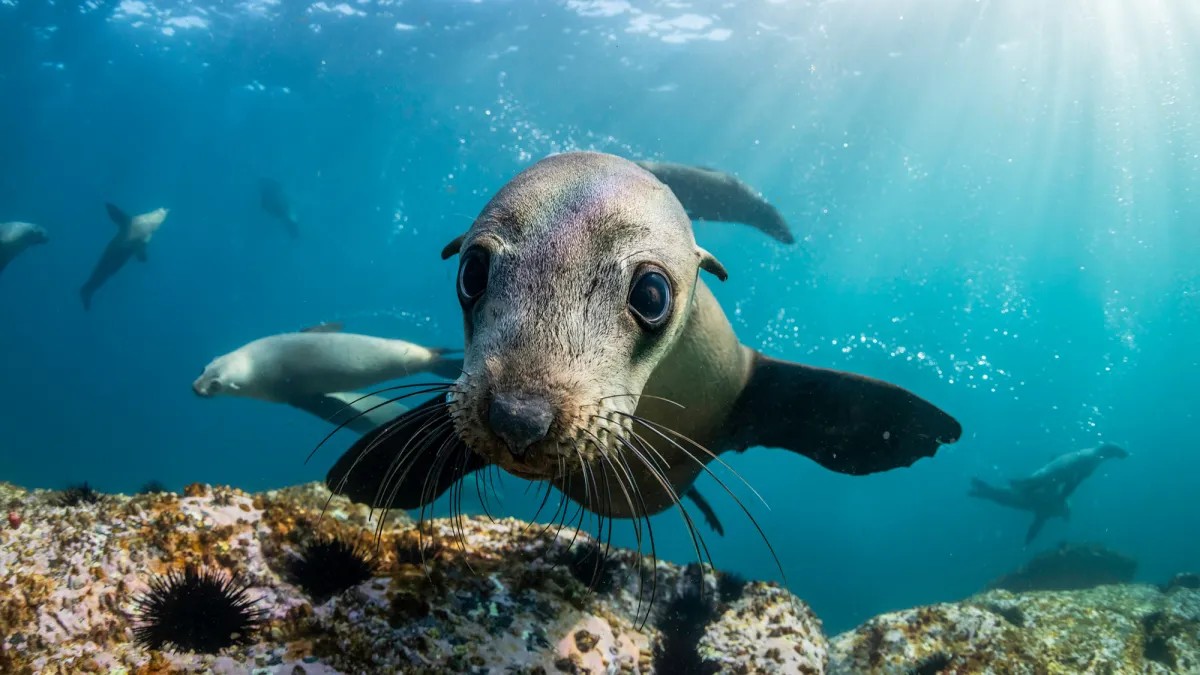
Marine mammals—dolphins, whales, seals, and more—face a unique challenge: surviving in an environment that is, by its very nature, dehydrating. Unlike freshwater habitats, the ocean’s high salt content pulls water out of living tissues through osmosis. Yet, these creatures not only survive but thrive in this harsh environment. Their success lies in a combination of evolutionary adaptations that allow them to maintain hydration despite constant exposure to saltwater.
The Osmoconforming vs. Osmoregulating Divide
The first key to understanding how marine life deals with saltwater is recognizing the difference between invertebrates and vertebrates. Invertebrates, like jellyfish and starfish, simply match their internal salt levels to the surrounding seawater. This means they don’t lose water, as there’s no osmotic pressure difference. However, vertebrates – animals with backbones, including fish, reptiles, birds, and mammals – require a more complex approach. They must regulate their internal salt balance to avoid dehydration.
Salt Excretion Strategies: A Matter of Anatomy
For fish, the solution is straightforward: specialized cells in their gills actively pump salt back into the ocean. Land-dwelling animals don’t have gills, so they rely on alternative methods. Marine mammals use highly efficient kidneys capable of producing extremely concentrated urine to expel excess salt. Some even have “reniculate” kidneys, packed with tiny filtering units that maximize salt removal.
Birds employ salt glands above their eyes that secrete concentrated salt solutions. Reptiles, like sea turtles and marine iguanas, have similar glands behind their eyes or connected to their noses, often visibly “crying” or sneezing out excess salt. These adaptations demonstrate how evolution has equipped different groups with tailored solutions to a shared problem.
The Hydration Shortcut: Eating Their Water
The most efficient way to stay hydrated in the ocean isn’t just about expelling salt, it’s about avoiding excessive intake in the first place. Most marine mammals are carnivores. By consuming fish, seals, and krill, they ingest prey with water content similar to their own bodies.
Studies have shown that elephant seal pups can survive for months without drinking freshwater, relying entirely on the water content of their diet. Baleen whales obtain water through swarms of krill they eat. This method is metabolically cheaper than constantly drinking saltwater and filtering out the salt.
Freshwater When Available
Some species supplement their diet with freshwater when possible. Manatees, for example, seek out low-salinity river mouths and have even been observed approaching boats for a drink. Similarly, hooded seal pups have been documented slurping up freshwater from ocean snow. These behaviors demonstrate that marine mammals actively seek out freshwater sources when available, recognizing its value as a direct hydration method.
Ultimately, marine mammals survive in saltwater by combining specialized excretion mechanisms with strategic feeding habits and opportunistic freshwater intake. This triple-pronged approach has allowed them to flourish in one of the most challenging environments on Earth. If you’re planning a beach trip, remember to bring your own water bottle—unlike these animals, humans lack the natural adaptations for saltwater survival.