


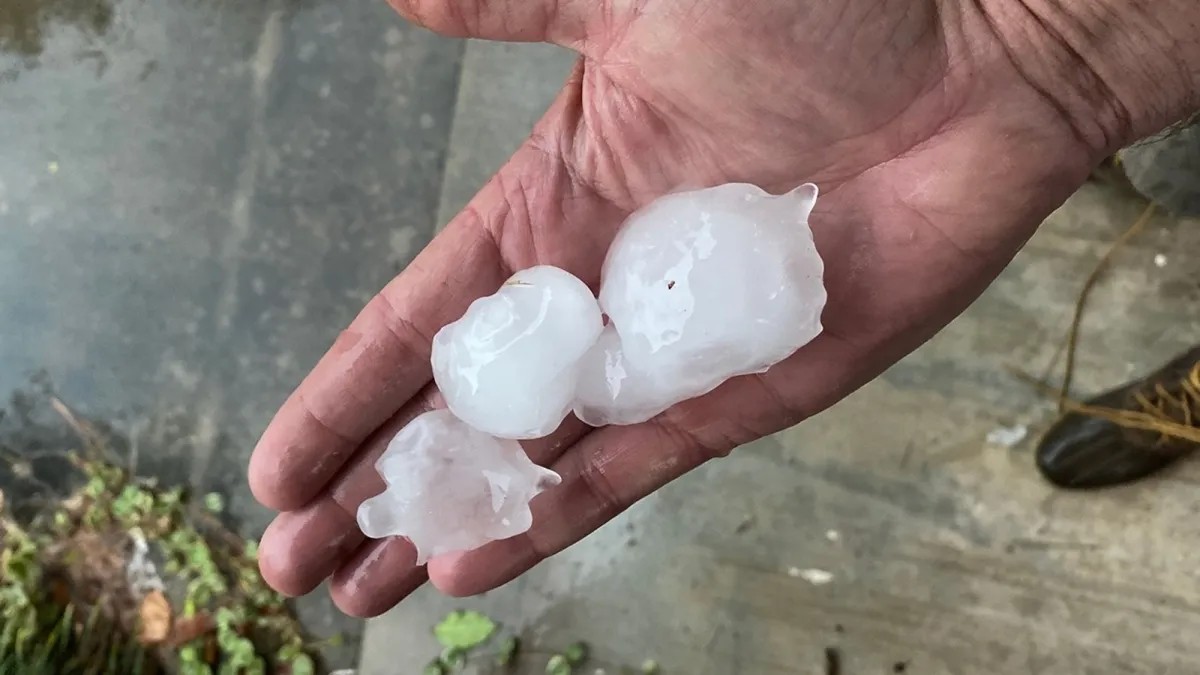
The United States space agency is actively soliciting photographic evidence of hailstorms from the public, in an effort to refine climate models and improve severe weather forecasting. The initiative comes as extreme weather events, including unusually large hail, become more frequent due to climate change.
The Growing Problem of Severe Hailstorms
On March 10th, Kansas City, Missouri, experienced a particularly destructive hailstorm, with stones reaching grapefruit size. Such events are becoming increasingly common, posing a significant threat to property and infrastructure. However, current meteorological models struggle to accurately predict hail size and melting rates – critical factors for damage assessment and public safety. This unpredictability is why NASA is turning to citizen scientists.
How the CoCoRaHS Network Works
NASA is partnering with the Community Collaborative Rain, Hail, and Snow (CoCoRaHS) network to gather data. The project, supported by the National Science Foundation and the National Oceanic and Atmospheric Association, relies on volunteer submissions via a free mobile app.
Users can report storm details – time, date, location – along with photos and measurements of hailstones. The submission process is designed to be quick, taking only 5-10 minutes per event, and free training is available. Dedicated volunteers can also contribute precipitation data using a low-cost rain gauge (approximately $42).
Why This Data Matters
The collected data will be combined with satellite records to refine hail prediction models and create more accurate melt profiles. Understanding how hail melts mid-air is crucial for estimating potential damage zones and improving early warning systems. Improved forecasting could significantly reduce property damage and protect communities from severe storms.
NASA’s crowdsourced approach underscores the growing need for real-time, localized weather data in the face of intensifying climate change. The success of this initiative depends on public participation.
Anyone interested in contributing should download the CoCoRaHS app and begin reporting hailstorm events, but always prioritize safety. Waiting until a storm has passed before collecting data is essential.


