


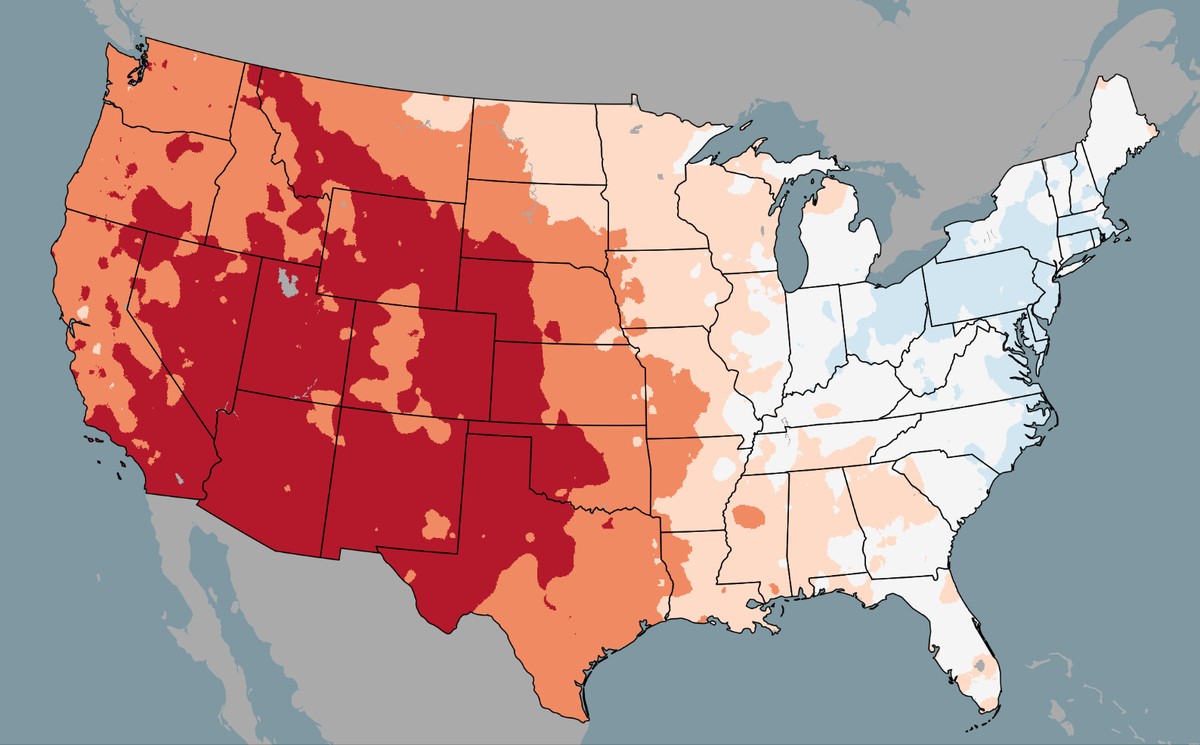
The recent U.S. winter was paradoxical: while many in the eastern states endured a prolonged, frigid season, the country as a whole experienced its second-warmest winter in 131 years. This stark contrast underscores a critical reality of climate change: extreme weather is becoming more unevenly distributed, with heat records breaking at an alarming rate.
Record-Breaking Heat in the West
The western half of the U.S. saw unprecedented warmth this winter, with nine states registering their hottest season ever and five their second-hottest. This extreme heat has exacerbated existing drought conditions, significantly raising the risk of severe wildfires during the coming spring and summer. The warming trend is not just about average temperatures—it’s about the increasing frequency and intensity of record-breaking events.
The Paradox of Eastern Cold
Despite the warmth dominating much of the country, eight states in the east experienced below-average temperatures. However, even these colder conditions weren’t historically significant; none came close to breaking cold records. The reason this cold felt so severe is that the baseline has shifted : cold snaps are becoming shorter and less intense as the planet warms.
Climate Change as the Underlying Driver
According to Climate Central, the average coldest winter temperature in the U.S. is now 7°F (4°C) warmer than in 1970. This means that when cold air masses do surge southward, they are not as extreme as they once were. The shift is not about eliminating cold weather entirely, but about making record-breaking cold increasingly rare while record-breaking heat becomes commonplace.
“Record cold has become a truly rare condition, whereas record warmth is now occurring with remarkable and disconcerting frequency,” notes climate scientist Daniel Swain of the California Institute for Water Resources.
Looking Ahead: More Heat to Come
The trend of extreme heat is projected to continue as long as greenhouse gas emissions remain high. The western U.S. is already bracing for another potential heatwave in mid-March, with temperatures possibly exceeding 100°F (38°C) in some areas.
The data is clear: the U.S. is experiencing a climate in transition, where the extremes are becoming more pronounced and heat is winning out. The question is no longer if records will fall, but how quickly they will continue to shatter as the planet warms.


