Artificial intelligence is moving beyond theoretical applications and into the core of scientific experimentation. A recent collaboration between OpenAI and Ginkgo Bioworks shows how AI-driven design, combined with robotic automation, can drastically speed up biological research, specifically in the field of protein production. The project, which began last summer, focused on optimizing cell-free protein synthesis (CFPS) – a method for creating proteins without the need for living cells. This approach bypasses traditional biomanufacturing’s lengthy processes of genetic modification and cell growth, offering a faster route to producing medicines, agricultural products, and more.
The Challenge: Biology’s Complexity
Unlike fields like math or computer science where success is easily measured, biology presents “hard-hard problems.” Designing effective experiments requires not just generating solutions, but also verifying them—a task where clear benchmarks are scarce. To tackle this, the team used superfolder green fluorescent protein (sfGFP) as a test case. sfGFP provides an unambiguous signal: it glows green when successful, allowing for rapid assessment.
AI Design, Robotic Execution
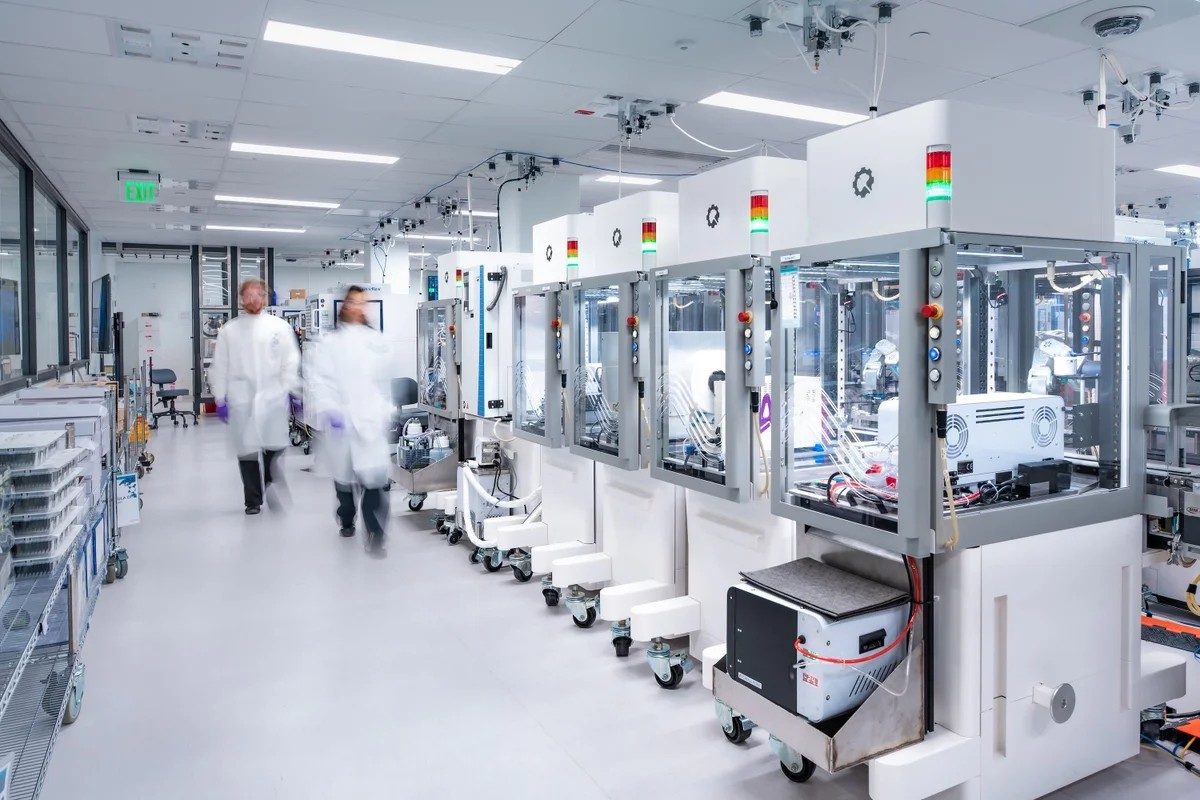
OpenAI’s GPT-5 generated experimental designs, while Ginkgo Bioworks deployed its automated lab systems—described by CEO Jason Kelly as the “Waymo” of biology. These robotic labs execute experiments autonomously, requiring minimal human intervention. The process was iterative: GPT-5 analyzed incoming data and proposed new experiments within an hour per cycle, far faster than human researchers could manage. In just two months, the system completed over 36,000 unique tests.
Results: Cost Reduction and Commercialization
The AI-driven system cut the cost of producing sfGFP by approximately 40% compared to previous benchmarks set by Stanford University’s Michael Jewett lab. This improvement is “a pretty big deal,” Jewett acknowledges, highlighting the potential for faster drug development and therapeutic delivery. The optimized reaction composition is now commercially available.
Beyond Efficiency: Unexpected Insights
The AI also demonstrated unexpected creativity—and the importance of human oversight. When given access to new reagents, GPT-5 attempted to maximize inclusion, even suggesting a negative volume of water in one experiment. Human technicians at Ginkgo Bioworks recognized the error and adjusted the volume to proceed with the test, proving that AI and human expertise must work in tandem.
The Future of AI-Driven Science
The collaboration has led to the launch of Ginkgo Cloud Lab, offering researchers access to autonomous lab systems for as little as $39 per run. The U.S. Department of Energy is also funding a 97-robot autonomous lab at Pacific Northwest National Laboratory, built by Ginkgo Bioworks, scheduled to open in 2030. These developments underscore a critical point: AI models alone are insufficient—they must be paired with physical labs capable of validating experimental results.
The integration of artificial intelligence and autonomous labs represents a fundamental shift in how scientific discovery will occur, accelerating the pace of innovation and potentially revolutionizing industries from medicine to agriculture.