


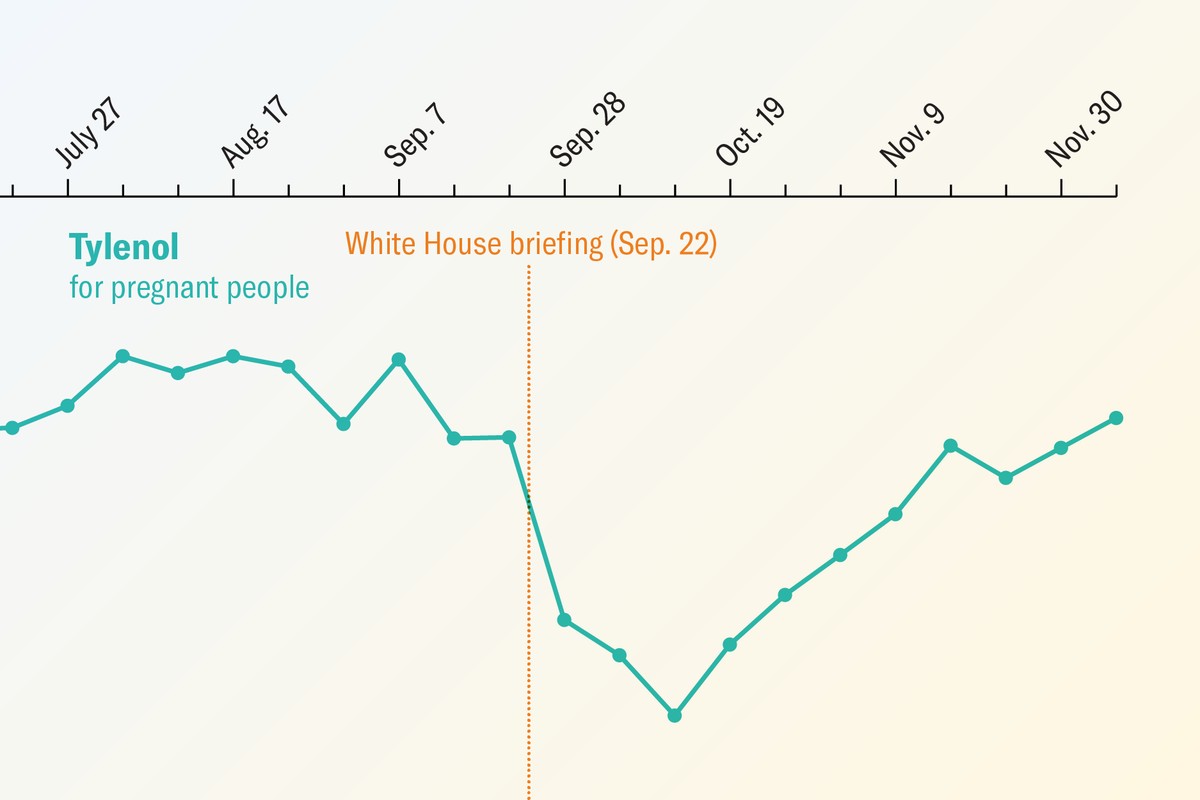
President Trump’s unsubstantiated claims linking acetaminophen (Tylenol) to autism led to a measurable decline in its use among pregnant women, according to research published in The Lancet. The study reveals a 20% decrease in acetaminophen prescriptions for pregnant patients in emergency rooms following a White House briefing where Trump falsely asserted a connection between the medication and autism risk.
The Impact of Misinformation
The analysis of nearly 90,000 pregnant patients and over 850,000 non-pregnant individuals demonstrates a clear correlation: the drop in acetaminophen prescriptions occurred only among pregnant women after the briefing. No such change was observed in the broader patient population. This suggests that Trump’s statements had a direct impact on medical decisions, whether through patients refusing treatment or doctors altering their recommendations.
The study also recorded a 71% surge in leucovorin prescriptions for children aged 5-17, a medication falsely promoted by Trump and his administration as an autism treatment despite lacking credible evidence. The most comprehensive studies, including one following 2.5 million children in Sweden, found no link between acetaminophen use during pregnancy and autism or ADHD rates.
Why This Matters
The incident highlights the dangerous consequences of spreading misinformation, especially when it comes to public health. Acetaminophen remains the safest available pain and fever reducer for pregnant women. Untreated fevers during pregnancy pose serious risks, including miscarriage, birth defects, and premature birth. Furthermore, untreated fevers have actually been linked to an increased risk of autism in offspring, directly contradicting Trump’s false claims.
The Danger of Unverified Treatments
The administration’s promotion of leucovorin as an autism treatment is also misleading. The largest study supporting the drug’s effectiveness was retracted due to data errors, and current evidence remains inconclusive. Meanwhile, alternative pain relievers like NSAIDs (ibuprofen, aspirin) carry their own risks during pregnancy, and opioids present addiction concerns for both mother and child.
The data confirms that Trump’s claims had a real-world impact on medical choices, leading to unnecessary risks for pregnant women. The incident serves as a stark reminder of the importance of evidence-based healthcare decisions over politically motivated falsehoods.


