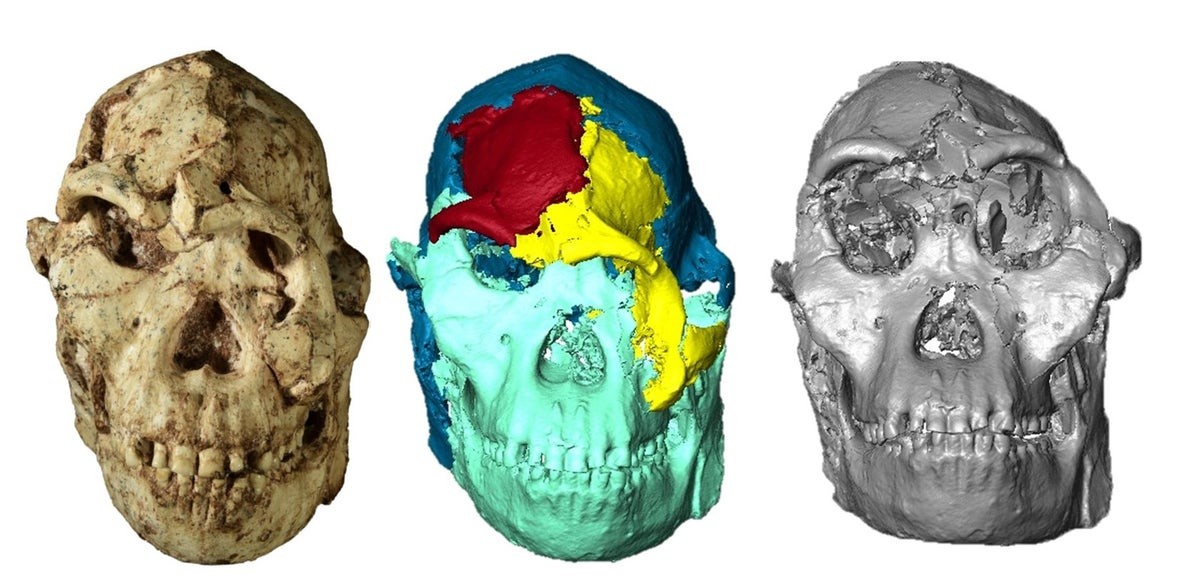
For decades, scientists have studied “Little Foot,” the most complete Australopithecus skeleton ever discovered in South Africa, yet a full facial reconstruction remained elusive. Now, after five years of digital modeling, researchers have published the first detailed reconstruction of Little Foot’s face, revealing key insights into this ancient human ancestor.
The Significance of “Little Foot”
The Australopithecus genus holds a critical place in the story of human evolution. These hominins lived over two million years ago in Africa, and while fossils like “Lucy” have captured public attention, Little Foot’s nearly complete skeleton offers an unparalleled view of their anatomy.
However, Little Foot’s skull was crushed after being buried for 3.67 million years, making reconstruction a monumental challenge. The new model, published in Comptes Rendus Palevol, finally provides a clear picture of the hominin’s facial features.
Key Findings of the Reconstruction
The reconstructed face shows that Little Foot had large eye sockets, a trait shared with other Australopithecus fossils found across Africa. This suggests a degree of evolutionary consistency across different regions.
“The reconstructed face reveals fascinating features…resembling those of other Australopithecus species living at the same time in eastern Africa,” explains lead author Amélie Beaudet, a paleoanthropologist at PALEVOPRIM in France.
This means that despite regional variations, Australopithecus species shared core facial characteristics, which may indicate common adaptations to their environment.
Next Steps in Research
Beaudet’s team is now focused on restoring the rest of Little Foot’s skull, with the eventual goal of reconstructing the brain. This research could shed light on cognitive development and how early hominins adapted to their surroundings.
The study represents a crucial first step in understanding human facial evolution. By piecing together the anatomy of Little Foot, scientists are unlocking deeper clues about how our earliest ancestors lived and evolved across Africa.