


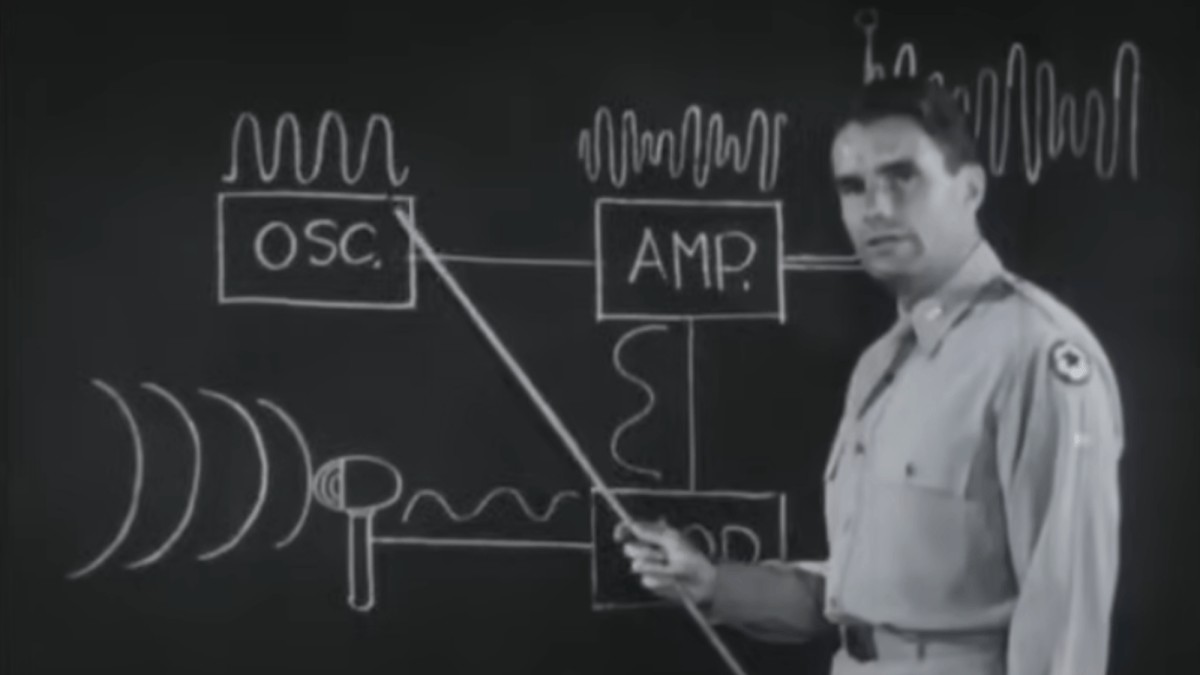
During World War II, reliable communications were a matter of life and death. The U.S. military recognized this acutely, and in 1944, it quietly commissioned a 30-minute training film titled “Basic Principles of Frequency Modulation.” While now a historical oddity, this video reveals how urgently the armed forces needed soldiers to understand a revolutionary technology at the time: FM radio.
The Rise of FM: Beyond Better Sound Quality
Today, most people take FM radio for granted. But in the late 1930s and early 1940s, it was a significant leap forward from its predecessor, AM (amplitude modulation). FM offered clearer signals with less static, making it more reliable. However, the military’s interest wasn’t just about better sound quality; it was about overcoming critical weaknesses in existing communication systems.
Before FM, the military relied heavily on AM frequencies. These were highly vulnerable to interference. Even simple electrical devices like electric razors could disrupt transmissions. As the training film bluntly puts it, “Frequency modulation licks this problem, and that’s why we want you to know something about it.”
How FM Works: A Technical Overview
The video explains the core principles of FM in straightforward terms. AM radio transmits information based on the strength of a carrier wave, making it susceptible to interference. FM, however, uses frequency instead. This means static only affects the signal’s amplitude – the part that doesn’t carry the message itself.
The film breaks down the key components: oscillators, modulators, limiters, and discriminators. It showcases how electrical interference won’t “hash up your messages” when FM is used correctly. The training material emphasized that FM provided a clear, static-free channel for critical communication, even in noisy environments.
Why This Matters Today
The training video is a stark reminder of how quickly technology evolves and how essential it was in wartime. While now somewhat outdated, the film still offers an impressively concise breakdown of radiowaves and the underlying physics. It also highlights a little-known fact: the military was among the first major adopters of FM technology due to its superior reliability.
The U.S. military’s early adoption of FM radio demonstrates how innovation often accelerates under pressure. The film is a relic of a time when understanding radio technology could literally mean the difference between victory and defeat.
The training video may seem hokey to a modern audience, but it speaks volumes about how even commonplace technologies once represented cutting-edge science.


