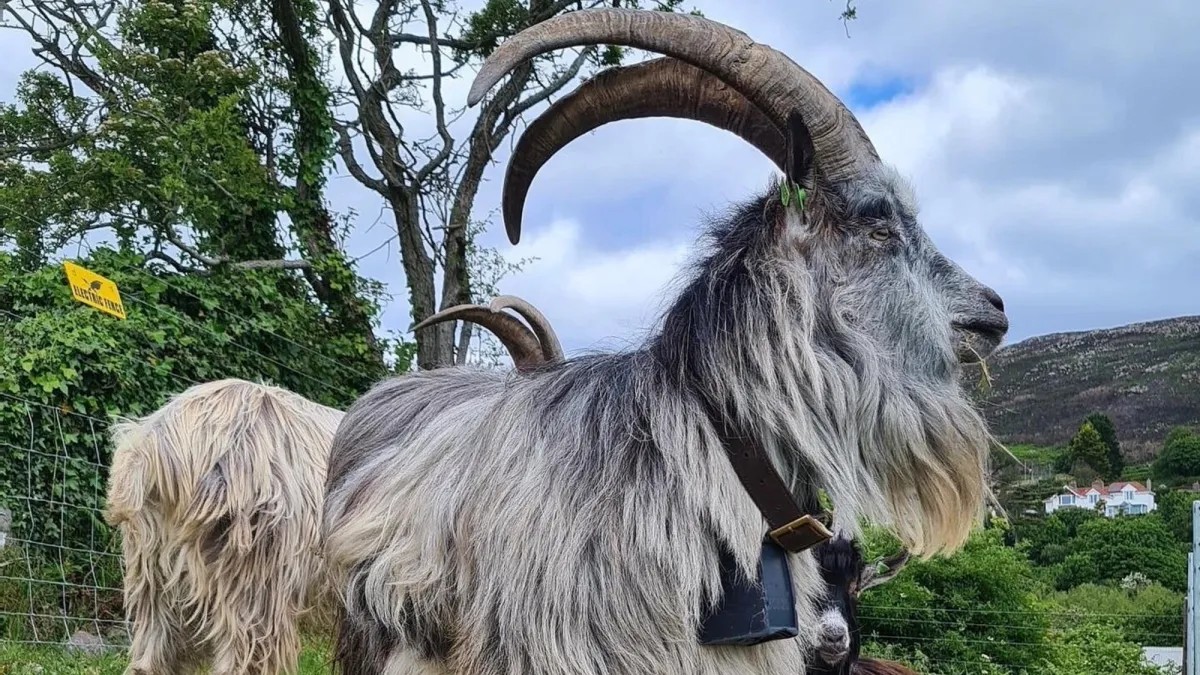
Ireland’s only native goat breed, the Old Irish Goat (Capra aegagrus hircus ), carries a remarkable genetic legacy stretching back 3,000 years to the Bronze Age. New research published in the Journal of Archaeological Science confirms that this critically endangered breed shares a direct genetic link with goats living in Ireland during the Late Bronze Age (1100-900 BCE). The findings validate long-held beliefs among conservationists and local communities, emphasizing the urgency of protecting this unique part of Ireland’s ancient heritage.
The Goat’s Deep Roots in Irish History
Goats were among the first domesticated animals in Ireland, present as early as Neolithic times. By the late 19th century (1891), around 282,000 Old Irish Goats roamed the country. However, numbers plummeted to just 9,000 by 1980 due to factors like unregulated hunting, habitat loss, and inbreeding. Despite this decline, the breed remains culturally significant, appearing in Irish folklore, place names, and traditions like the Puck Fair festival in County Kerry—where a wild-caught goat is crowned “King Puck” for three days of celebration.
Why this matters: The persistence of this breed offers a rare glimpse into ancient farming practices. While sheep bones dominate archaeological records (due to difficulty distinguishing them from goat remains), historical evidence suggests goats played a vital role in trade, particularly in the export of skins from ports like Carrickfergus.
Genomic Evidence Confirms Ancient Lineage
Researchers analyzed remains from Haughey’s Fort in County Armagh (Bronze Age) and Carrickfergus (medieval) using radiocarbon dating, genetic analysis, and a technique called ZooMS (protein fingerprinting to identify species). The results revealed that the ancient goats are genetically most similar to the Old Irish Goats surviving today.
Key finding: The continuity in genetic makeup suggests a remarkably stable goat population on the island for over 3,000 years. However, modern Old Irish Goats show signs of recent inbreeding, linked to the breed’s drastic population decline in the past few decades. This indicates the genetic bottleneck is a modern issue, not a long-term historical trait.
Implications for Conservation and Future Research
The study underscores the importance of biomolecular and genetic analysis in reconstructing Ireland’s animal history. By combining these tools with archaeological science, researchers can uncover even more details about the breed’s past. As Sinead Keane of The Old Irish Goat Society notes, this research “provides powerful scientific validation” for conservation efforts.
Protecting the Old Irish Goat isn’t just about saving a species; it’s about preserving a living connection to Ireland’s prehistoric past.
The findings reinforce the need for continued monitoring and intervention to prevent further genetic erosion within this ancient and resilient population.