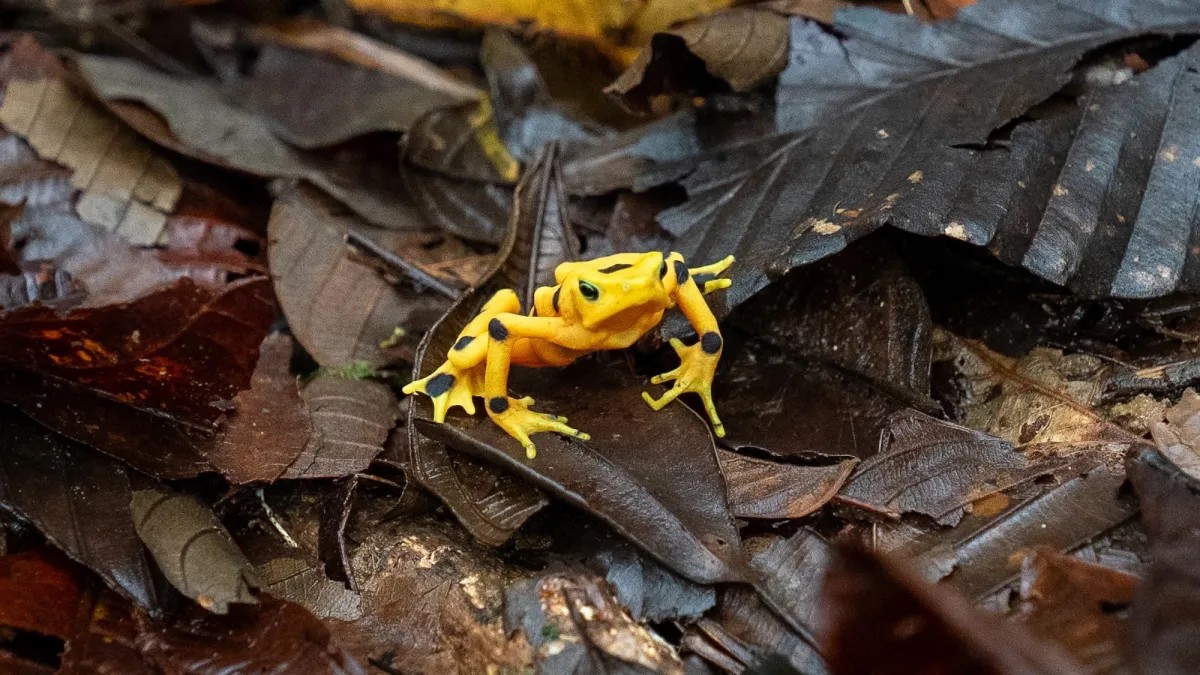
For the first time in nearly two decades, the vibrant yellow Panamanian golden frog (Atelopus zeteki ) is hopping back into its native ecosystem. Conservationists have successfully reintroduced a new generation of these critically endangered amphibians, marking a turning point in their fight against extinction. This success is particularly meaningful because the golden frog nearly vanished entirely due to a deadly fungal disease.
The Threat of Chytridiomycosis
The crisis began in the late 1980s with the arrival of Batrachochytrium dendrobatidis (Bd), an invasive fungus that devastates amphibian populations. Bd spreads easily through water, making stream-dwelling frogs like the golden frog extremely vulnerable. The fungus disrupts electrolyte balance in infected frogs, leading to heart failure and death – a condition known as chytridiomycosis. By 2009, the fungus had wiped out the last concentrated population of golden frogs in Panama’s El Valle de Anton region.
The rapid spread of Bd highlights a global threat to amphibian biodiversity. Invasive species, especially pathogens, can trigger collapses in fragile ecosystems with little warning. This underscores the importance of biosecurity measures and proactive conservation efforts.
A Rescue and Rewilding Effort
Despite the near-total disappearance from the wild, the golden frog wasn’t completely lost. The Smithsonian-affiliated Panama Amphibian Rescue and Conservation Project (PARC) stepped in, establishing breeding programs in controlled facilities. Years of dedicated work stabilized lab populations, making reintroduction possible.
“We are entering a new phase of our work to study the science of rewilding,” said PARC director Roberto Ibañez. The reintroduction process, however, has been difficult. Initial soft releases saw approximately 70% mortality from chytridiomycosis within the first 12 weeks.
Lessons Learned for Future Conservation
The high initial mortality rate, while grim, provided invaluable data. Researchers are now using this information to identify “climatic refuges” – areas where conditions are favorable for frogs but too hot for the fungus to thrive.
This adaptive strategy demonstrates the power of combining scientific monitoring with practical conservation interventions. Conservation biologist Brian Gratwicke emphasized that these data will “inform our conservation strategy moving forward.” PARC has already successfully rewilded three other frog species, showing the effectiveness of their approach.
A Cautionary Note
While the return of golden frogs is a triumph, it’s crucial to remember they are toxic. The amphibians produce potent defenses, including steroidal bufadienolides and guanidinium alkaloids. Admire them from a distance—their survival depends on careful observation, not interaction.
The reintroduction of Panama’s golden frogs represents a beacon of hope in the face of global amphibian decline. This success story demonstrates that targeted conservation efforts, combined with scientific monitoring and adaptive strategies, can reverse even the most dire extinction trends.