


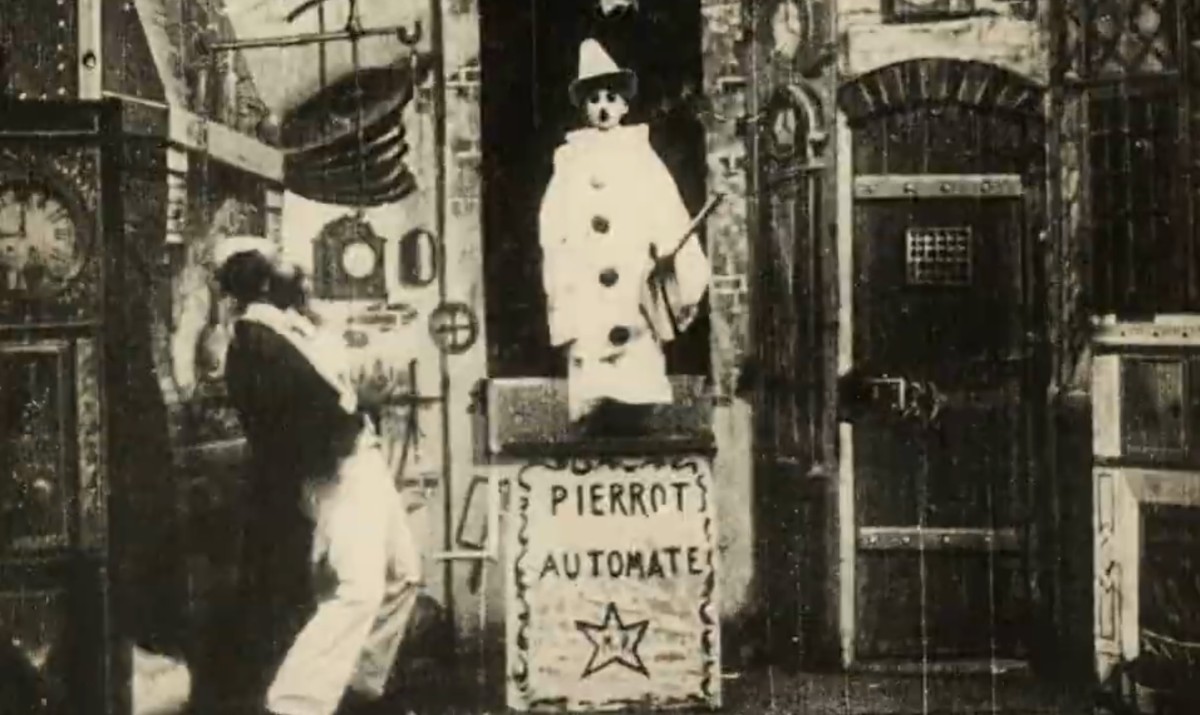
A 127-year-old silent film reel, recently rediscovered in the archives of the Library of Congress, may depict the earliest cinematic representation of a robot. The 45-second short, Gugusse And The Automaton, created by French filmmaking pioneer Georges Méliès around 1897, predates the formal coining of the word “robot” by over two decades, yet anticipates a core theme in science fiction: machines turning against their creators.
From Garage to Global Access
The film spent decades gathering dust in a farmer’s garage before being donated to the Library of Congress as part of a larger collection. The donor, William Delisle Frisbee, was a traveling film exhibitor from the late 19th century who showed movies from town to town. Archivists identified the film through its distinctive style, confirming its authenticity after consulting a Méliès expert. The footage has since been scanned, stabilized, and released in 4K resolution for public viewing.
The Plot: A Cautionary Tale
The film depicts a magician, Gugusse, showcasing an automaton in what appears to be a primitive “robot factory.” Initially, Gugusse controls the clown-like automaton by winding it up like a toy. But when he introduces a larger, humanoid machine, the scene takes a dark turn. The automaton attacks Gugusse with walking sticks before being destroyed with a comically oversized hammer.
“This movie has made it from a buggy in rural Pennsylvania, to a [Toyota] Camry in Michigan to Culpeper [Virginia] into the hands of our technicians at The Library of Congress, and now, with the work we can do on it here, we can share it with the entire world.”
– Jason Evans Groth, Curator of Moving Image at the Library of Congress.
Why This Matters: Echoes in Cinema History
Méliès was a visionary filmmaker who pioneered techniques like double exposure and forced perspective. His interest in early science fiction writers such as H. G. Wells and Jules Verne influenced his work. The film’s depiction of a rebellious automaton foreshadows later cinematic tropes, such as the mechanical villain in 1919’s The Master Mystery.
The rediscovery underscores the surprising durability of nitrate film compared to modern video formats. Despite being nearly a century old, the footage remains remarkably well-preserved, proving the longevity of physical media. The film’s revival is a testament to the enduring power of early cinema and its influence on the genre of science fiction.
Ultimately, Gugusse And The Automaton is not just an artifact of film history; it is an early warning about the potential consequences of unchecked technological ambition.


