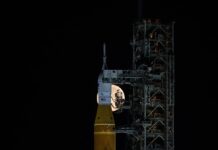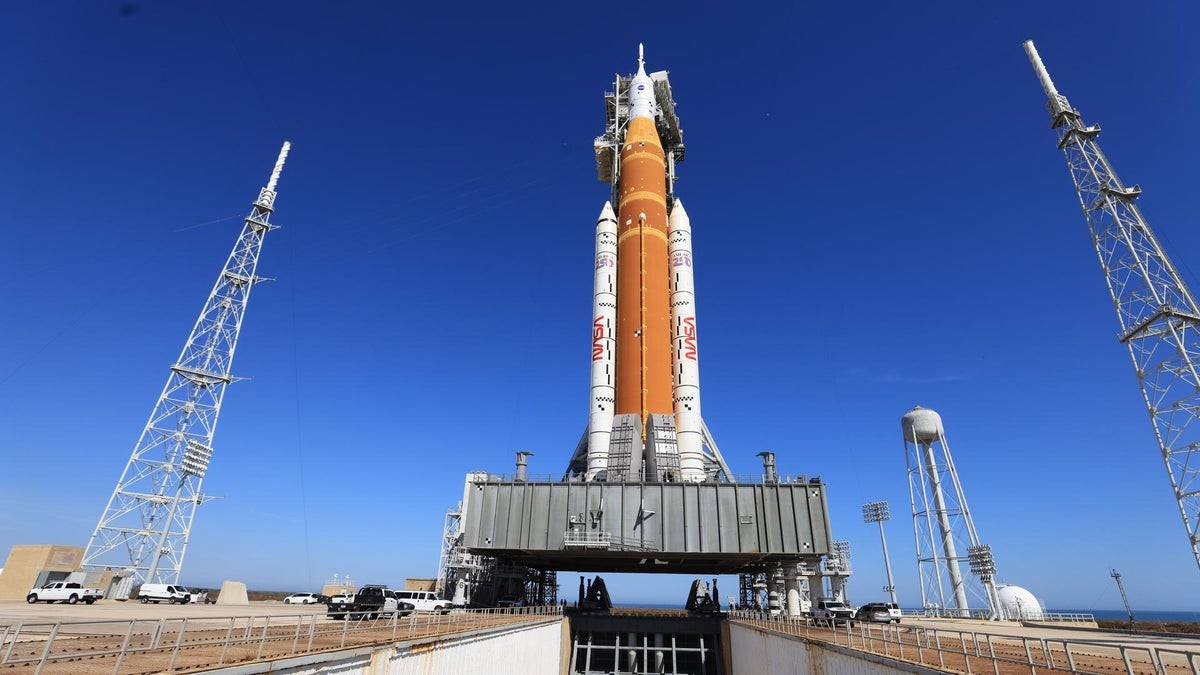
NASA has cleared a crucial hurdle for its Artemis II mission, targeting a launch date of March 6 after successfully completing a critical “wet dress rehearsal” on Thursday. This test involved fully fueling the Space Launch System (SLS) rocket and the Orion capsule, simulating a launch countdown to verify readiness.
Overcoming Previous Challenges
The rehearsal is essential because the SLS cannot launch without it. The previous attempt, conducted in February, revealed hydrogen fuel leaks – a recurring issue that also affected the Artemis I mission. According to NASA’s Artemis launch director Charlie Blackwell-Thompson, these leaks have now been addressed, and no new issues emerged during the latest test.
What the Mission Entails
Artemis II will carry four astronauts – Christina Koch, Reid Wiseman, Victor Glover (all NASA), and Jeremy Hansen (Canada) – on a 10-day lunar flyby. This mission isn’t a landing; instead, the crew will orbit the moon, gather data, and test systems vital for future lunar surface missions.
Why This Matters
The Artemis program represents a renewed push for human lunar exploration. The ultimate goal is Artemis III, planned for 2028, which will land astronauts on the moon for the first time since 1972. Artemis II is a vital stepping stone, gathering data on deep-space human flight and validating the SLS and Orion for more ambitious missions.
The success of Artemis II is not just about reaching the moon again; it’s about establishing a sustainable presence beyond Earth.
NASA still has to analyze data from the test and run final flight readiness checks. But the March 6 launch target now appears realistic, bringing humanity closer to a new era of lunar exploration.