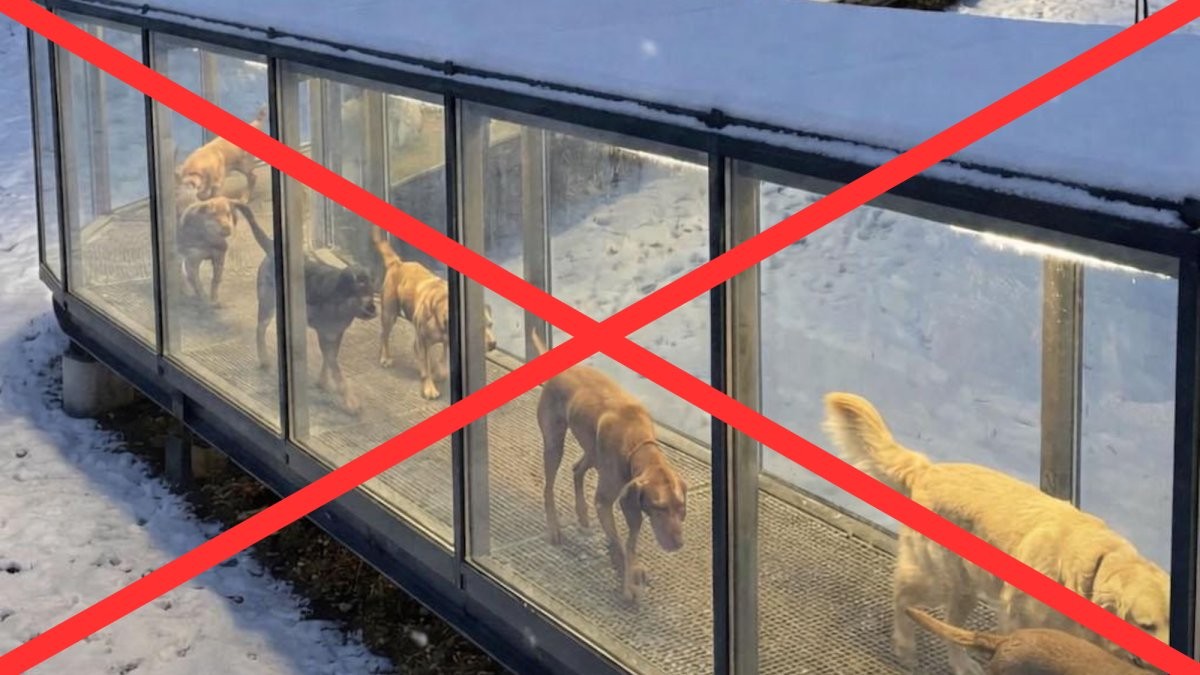
The internet is currently flooded with AI-generated misinformation, and the latest viral claim—that Hungary constructed heated tunnels for its stray dogs—is demonstrably false. This hoax, spreading rapidly across social media, illustrates the growing difficulty in distinguishing between real and fabricated content online.
The Viral Claim and Its Origins
The fabricated story centers around an image depicting a glass-enclosed, well-lit corridor through which stray dogs are supposedly walking in a snowy environment. The claim suggests the tunnels were built to keep the animals warm during freezing temperatures. The image gained traction on platforms like Facebook and Reddit, with users questioning its authenticity in subreddits dedicated to identifying AI-generated content.
Why the Image Is Fake
Several key indicators reveal the image as a fabrication:
- Low Resolution and Inconsistencies: The image quality is notably poor, a common trait of AI-generated visuals designed to deceive. Lighting, shading, and shadows are inconsistent, further suggesting artificial creation.
- Illogical Details: The dogs in the image appear unusually well-groomed for strays, many even wearing collars. This detail points to a flaw in generative AI, which struggles with nuanced realism and often incorporates elements from its training data (in this case, collared dogs).
- Structural Implausibility: The tunnel’s design—a zig-zagging structure in an open space—makes no practical sense for animal welfare or efficient use of resources. The image raises questions about the purpose and destination of the tunnels.
- Lack of Verification: No reputable news sources, either Hungarian or international, have reported on such a project. The absence of credible reporting is a critical red flag.
The Broader Problem of AI-Generated Misinformation
This hoax is not an isolated incident. The same pattern was observed earlier with a viral image claiming North Carolina conservationists were wrapping wild horses in fiberglass insulation to keep them warm. Both cases highlight the increasing sophistication and prevalence of AI-generated misinformation, which exploits emotional responses (in this case, sympathy for animals) to spread rapidly.
“The technology is still pretty terrible at anything other than modest renderings. You can ask it to create an image of stray dogs, but if its dataset includes a lot of dogs with collars, then you’ll likely receive collared canines in the final product.”
The issue isn’t just about visual deception; it’s about eroding trust in online information. As AI generation tools become more accessible, the line between reality and fabrication blurs, making critical thinking and source verification more important than ever.
Conclusion
The claim that Hungary built heated tunnels for stray dogs is false. The image is AI-generated, riddled with inconsistencies, and lacks any credible supporting evidence. This incident serves as a stark reminder to approach online content with skepticism, verify sources, and avoid letting emotional biases cloud judgment.