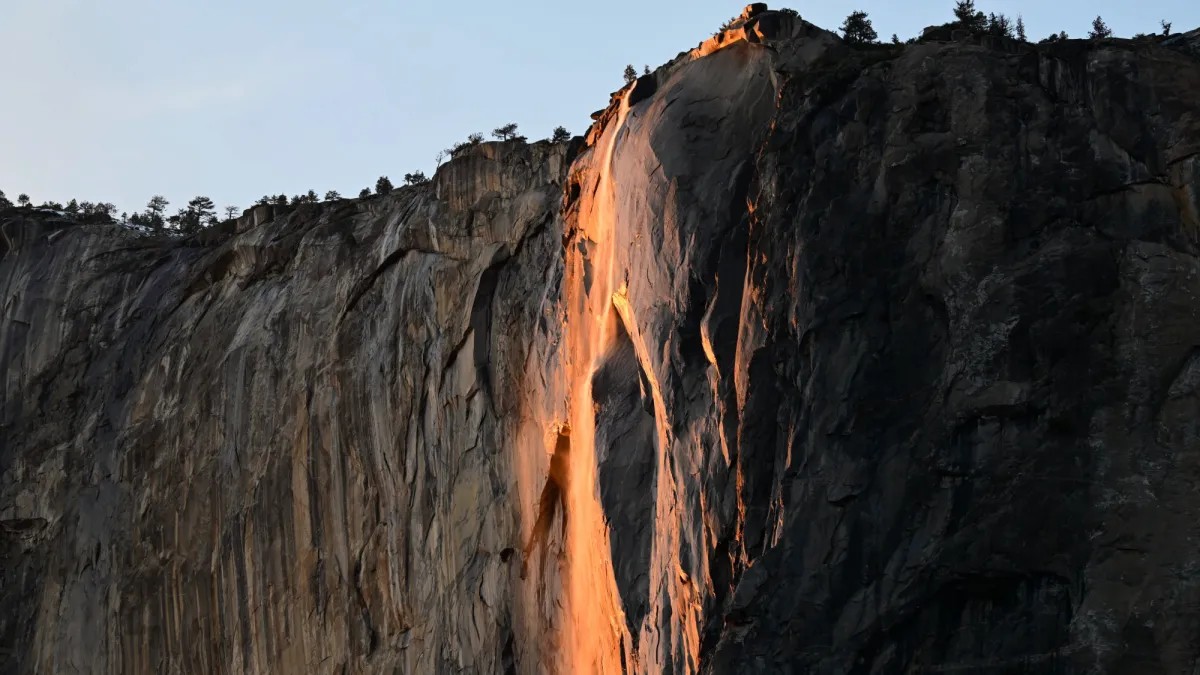
Yosemite National Park is once again preparing for its annual “Firefall” phenomenon, where the setting sun illuminates Horsetail Fall on El Capitan, creating the illusion of molten gold cascading down the granite cliff. This rare event, expected between February 10-26, draws crowds eager to witness nature’s own light show.
Why This Matters
The Horsetail Fall “Firefall” isn’t just a pretty sight; it’s a reminder of how unique and fragile natural events can be. The spectacle relies on a precise alignment of conditions: a strong, flowing waterfall (typically only in winter), clear skies, and the sun hitting at the correct angle.
The increasing popularity of this event raises concerns about its sustainability. Overcrowding and environmental damage have been reported in past years, highlighting the tension between enjoying natural wonders and preserving them. The National Park Service is actively working to balance visitor access with environmental protection.
The Science Behind the Glow
The effect is simple physics. When sunlight strikes the waterfall at a low angle during sunset, it refracts and reflects off the falling water droplets, creating a fiery glow. The intensity of the effect varies depending on the water flow and atmospheric conditions.
Planning Your Visit
If you’re planning to witness this event, be prepared for winter conditions and potential crowds. The park service recommends arriving early and being patient; the Firefall is not guaranteed every night. Most importantly, respect the environment: pack out everything you pack in, stay on designated trails, and follow park guidelines to minimize your impact.
Yosemite’s Firefall is a stunning reminder of nature’s beauty, but its continued existence depends on responsible visitation. The park’s efforts to manage crowds and protect the environment are essential to ensuring this spectacle remains a wonder for generations to come.