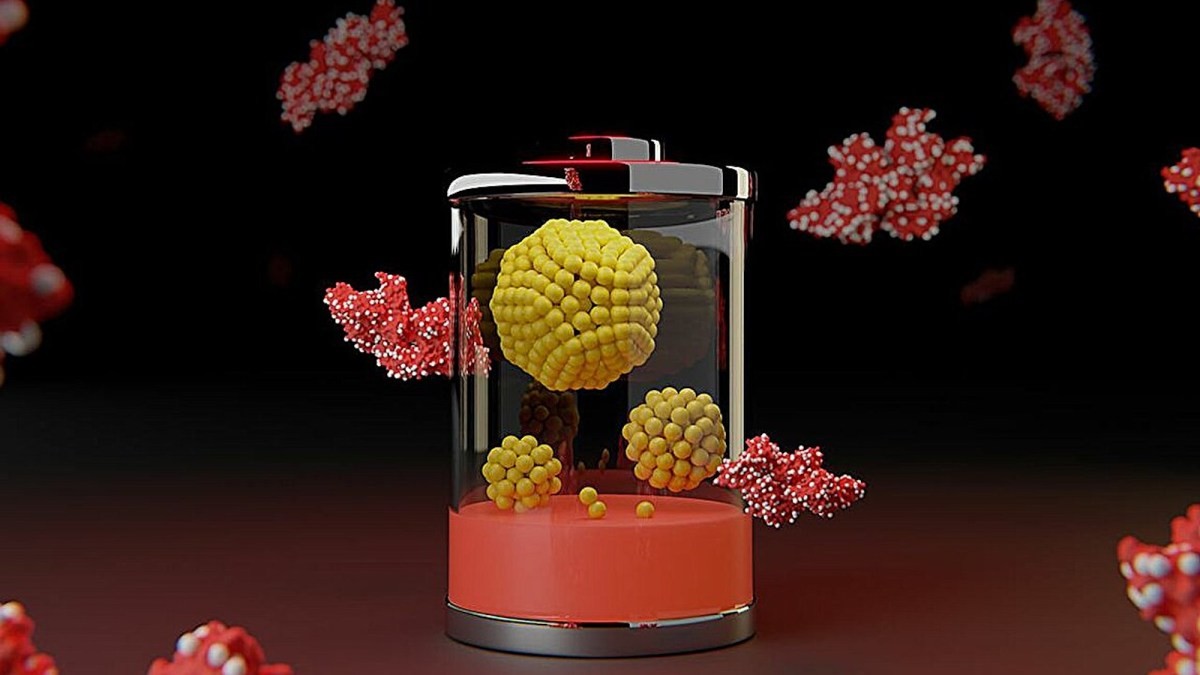
Researchers have revived a battery technology pioneered by Thomas Edison, not for cars as he once envisioned, but for stabilizing renewable energy sources. A new prototype, detailed in the journal Small, demonstrates a nickel-iron battery that recharges in seconds and lasts over 30 years with daily use—over 12,000 cycles.
The Early Electric Age and Edison’s Vision
Electric vehicles weren’t a modern invention. By 1900, electric-hybrid cars outnumbered gasoline models in the United States. Edison himself patented a lead-acid automotive battery in 1901, nearly setting the stage for a 20th century powered by electricity. However, higher costs and limited range (around 30 miles) ultimately favored the internal combustion engine. Edison’s subsequent efforts to develop a nickel-iron successor never fully materialized.
Renewable Energy’s New Powerhouse
Today, with climate change driving the shift to renewable energy, Edison’s abandoned concept is seeing a revival. Lithium-ion batteries dominate the market, but nickel-iron offers advantages for grid-scale energy storage. Researchers at UCLA have found that the technology excels in environments where quick charging and longevity are critical, such as solar farms and data centers.
Biomimicry at the Nanoscale
The breakthrough relies on a bio-inspired approach. The team, led by Maher El-Kady and Ric Kaner, drew inspiration from how bones and shells form: proteins guide the arrangement of minerals to create strong yet flexible structures. They adapted this principle by using proteins derived from beef processing byproducts, reinforced with graphene oxide, to scaffold nickel and iron atoms.
The process involves heating the material to remove oxygen from the graphene oxide, embedding the metallic clusters into a near-99% air-filled aerogel. This dramatically increases surface area, allowing for faster charging, higher efficiency, and greater storage capacity. As El-Kady explains, “almost every single atom can participate in the reaction” at this nanoscale level.
Beyond Lithium: A Sustainable Alternative
The new nickel-iron battery doesn’t yet match lithium-ion in energy density for vehicles. But its rapid recharge, long lifespan, and reliance on abundant materials—avoiding rare earth metals—make it ideal for stabilizing renewable energy grids. The battery can quickly absorb excess solar power during the day and release it at night, or provide backup power for critical infrastructure.
This innovation represents more than just a chemistry experiment. It’s a demonstration that overlooked technologies can find new life in evolving energy landscapes. The simplicity of the process—mixing readily available ingredients and applying heat—suggests that this forgotten battery may soon be powering a more sustainable future.