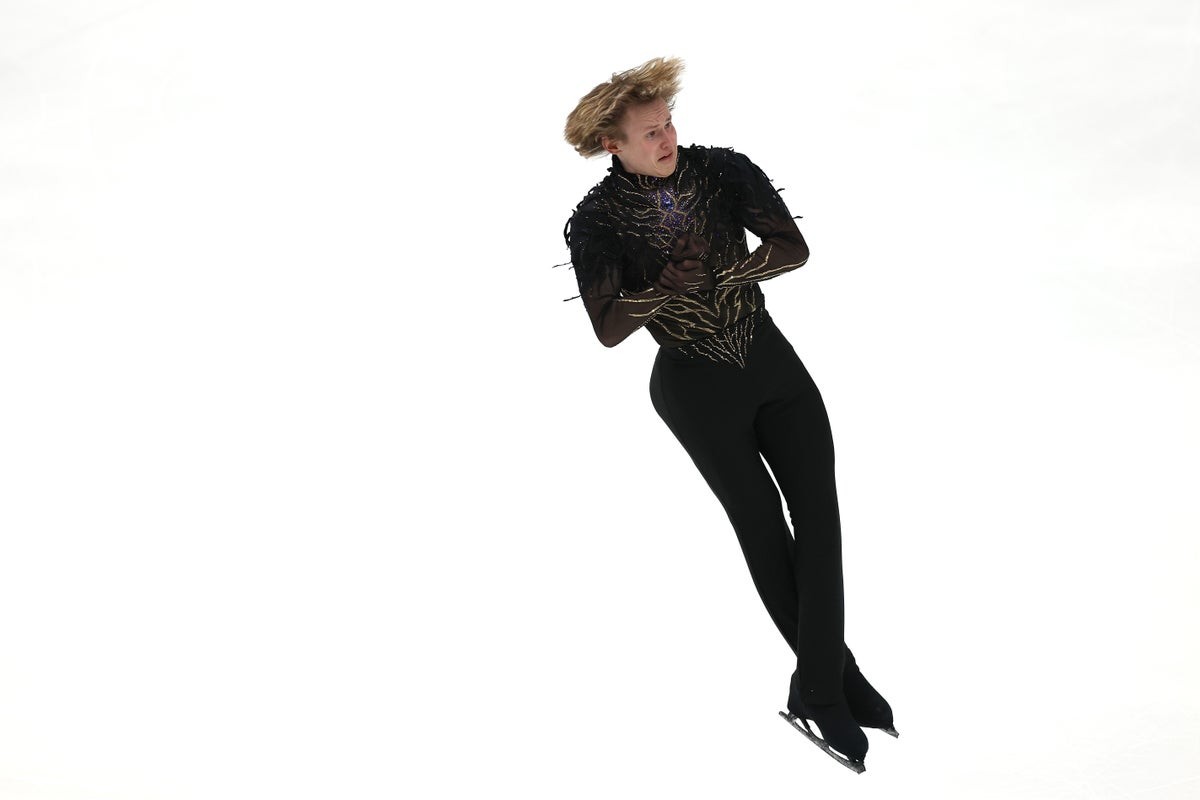
Figure skating has always pushed the boundaries of human athleticism. For decades, the quadruple axel – a jump involving four-and-a-half rotations in the air – was considered unattainable, an equivalent to breaking the four-minute mile. But in 2022, Ilia Malinin, now known as the “Quad God,” shattered that barrier. He became the first and, so far, only skater to land the quad axel in competition, a feat that redefined the sport’s limits.
The Evolution of Risk and Reward
For two decades, figure skating has increasingly favored harder, flashier jumps. This shift isn’t arbitrary. A major judging scandal at the 2002 Olympics, known as “skategate,” led to a revised scoring system. The International Skating Union (ISU) capped artistry scores but removed ceilings on technical scores, incentivizing skaters to attempt and perfect increasingly difficult maneuvers. The result? A relentless pursuit of higher rotations, demanding both physical prowess and precise technique.
The physics behind these jumps are deceptively simple in principle. Skaters build momentum, then twist like springs, maximizing both height and rotation speed. The axel is uniquely difficult because skaters take off facing forward, requiring an extra half-rotation upon landing. All other jumps launch backward from the blade’s toe pick or edges.
The Human Factor: Why Malinin Stands Out
While the physics remain constant, the human body’s ability to execute them doesn’t. More rotations mean thinner margins for error, requiring elite strength, conditioning, and innate talent. Biomechanics researchers emphasize that a narrower build provides an advantage. By pulling arms closer to the body during rotation, skaters reduce their moment of inertia, spinning faster with less effort.
Ilia Malinin embodies this advantage. His slight physique, coupled with his exceptional skill and a lineage of Olympic-level coaching (his parents are former Olympians), makes him a rare anomaly. Another standout is Nathan Chen, who dominated with five quads in a single program at the 2022 Olympics. Both skaters consistently outperform competitors, demonstrating the power of optimized technique and physical conditioning.
Beyond Quads: The Future of the Sport
The quest for harder jumps has even impacted women’s skating. In the early 2020s, young Russian skaters dominated by landing quads, facilitated by narrower, prepubescent bodies. A doping scandal at the 2022 Olympics prompted the ISU to raise the minimum age to 17, curbing the quad’s prevalence in women’s competition. Now, the focus has shifted back to the triple axel, once considered risky but now executed with apparent ease.
Technological advancements have played a crucial role. Pole harnesses allow coaches to support students mid-air, building muscle memory and reducing injury risk. Video analysis tools like Dartfish enable precise breakdown of technique, identifying subtle adjustments for optimal performance. Three-dimensional cameras are also being used to refine coaching feedback.
The Quintuple Jump: An Inevitable Horizon?
Experts predict the arrival of the quintuple jump is only a matter of time, with Malinin likely already experimenting with it in practice. While the human body will eventually reach a physical limit – likely the quintuple – the current trajectory suggests that skaters will continue to push boundaries until that point.
The debate remains whether this relentless pursuit of harder jumps is beneficial for figure skating’s future. Some fear the emphasis on technical difficulty will overshadow artistry, potentially sacrificing the grace and expression that once defined the sport. Yet, the Quad Era is here to stay, reshaping the landscape of competitive figure skating.
Ultimately, the sport’s evolution is driven by a simple equation: harder jumps equal higher scores. As long as this remains true, skaters will relentlessly pursue the next impossible feat, redefining what is achievable on the ice.