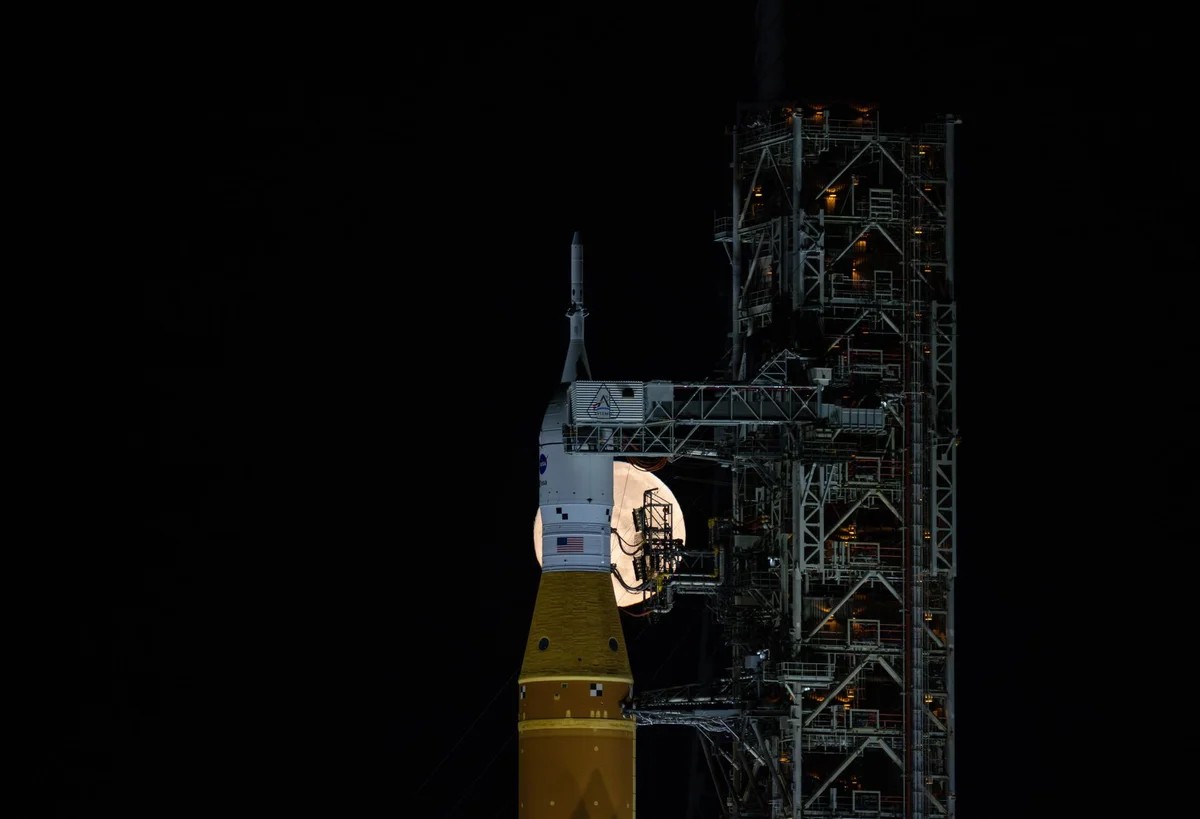
NASA’s upcoming Artemis II mission, set to send four astronauts on a lunar flyby, is drawing criticism as experts debate the safety of its heat shield. While the agency insists the spacecraft is prepared for a successful return to Earth, questions linger following damage observed on the Orion capsule during the uncrewed Artemis I mission in 2022.
Legacy Material, Modern Risks
The Orion capsule’s heat shield utilizes Avcoat, a material originally designed for the Apollo program. However, the current shield differs structurally from its Apollo counterpart: it consists of fewer, larger tiles rather than the Apollo design’s honeycomb structure.
This change has raised concerns among some engineers, including Ed Pope, an advanced materials expert, who suggests that the revised design introduces unaccounted-for risks. NASA opted for Avcoat in 2009, and as space historian Jordan Bimm notes, there have been limited reentry tests since then. The single full reentry test occurred during Artemis I, where the shield sustained unexpected damage.
Damage Observed, Confidence Maintained
During Artemis I’s reentry, large chunks of Avcoat broke off the capsule, leaving charred holes in the heat shield. NASA’s inspector general concluded that astronauts onboard would likely have survived, but the incident prompted questions about the design’s integrity.
NASA has since altered the Artemis II reentry trajectory to reduce stress on the shield, but critics argue this is a workaround rather than a fix. The agency is confident in its approach, with officials stating they feel “very confident” in the shield’s performance. Administrator Jared Isaacman emphasized that human spaceflight always involves risk, but NASA is committed to mitigation through rigorous testing and engineering.
History of Disaster
The debate over Artemis II’s heat shield echoes past NASA tragedies, such as the Space Shuttle Columbia disaster in 2003, where a heat shield failure led to the spacecraft’s breakup upon reentry. Former astronaut Charles Camarda has voiced concerns that NASA is repeating past mistakes by using the same potentially flawed shield without further testing.
However, other experts, like Danny Olivas, who participated in the Artemis I review, argue that NASA has done enough analysis to deem the risk “acceptable.” Space historian Jordan Bimm points out that NASA disasters historically stem from design and systemic failures rather than operator error.
Uncertain Outlook
While NASA insists Artemis II will proceed only when ready, the controversy underscores the inherent risks of space travel. Ed Pope estimates the chance of a heat shield failure at between 1 in 5 and 1 in 50, despite believing the mission will likely succeed. The debate highlights the tension between pushing the boundaries of space exploration and ensuring astronaut safety.