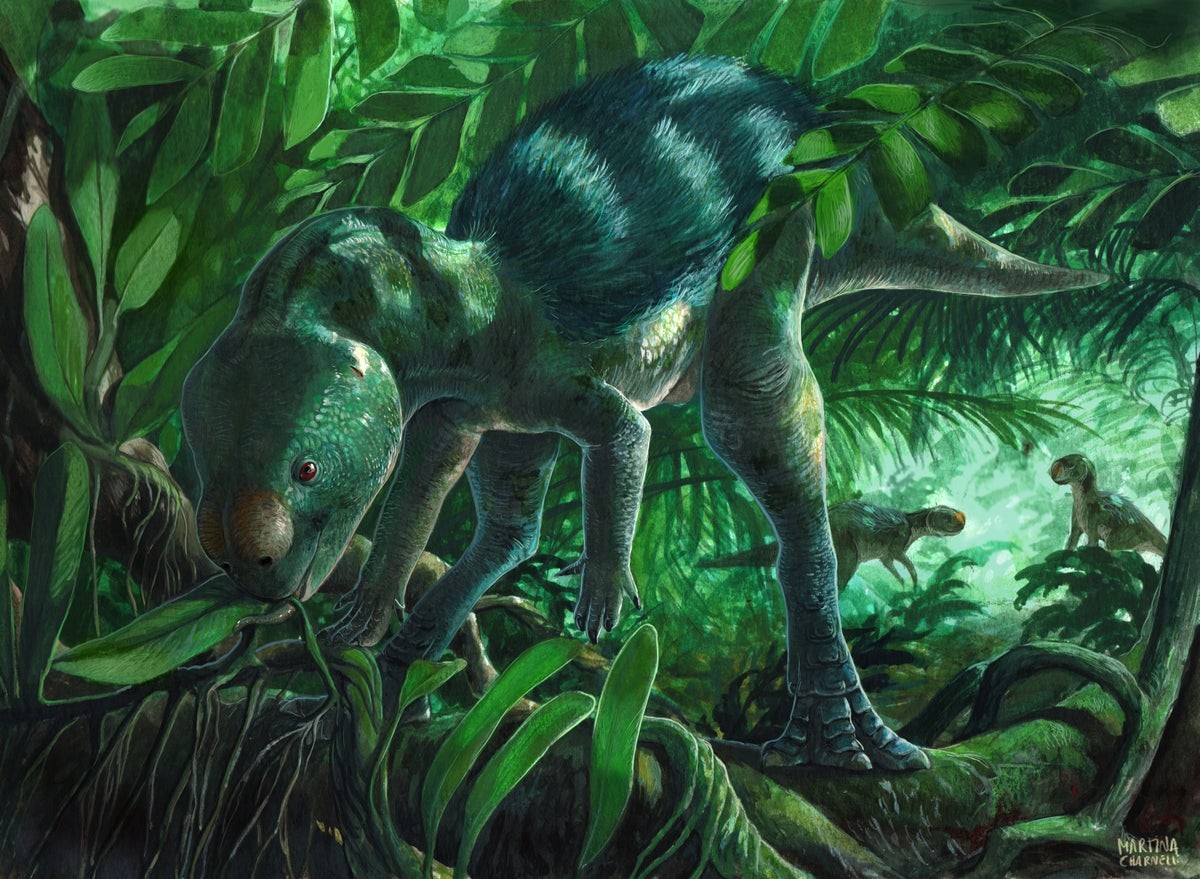
Палеонтологи в Іспанії виявили напрочуд маленький вид динозаврів — розміром із сучасну курку — що змусило вчених переглянути давні теорії про еволюцію динозаврів. Відкриття, детально описане в новому дослідженні, опублікованому в журналі Papers in Paleontology, зосереджено на Foskeia pelendonum, травоїдному динозаврі, який жив на території сучасної північної Іспанії приблизно 125 мільйонів років тому під час раннього крейдяного періоду.
Унікальна анатомія та особливості харчування
Foskeia pelendonum досягала в довжину близько півметра і мала незвичайну структуру черепа в поєднанні зі спеціалізованими зубами. Дослідники припускають, що ця унікальна анатомія вказує на раніше невідомий спосіб годування, який може суттєво відрізнятися від інших орнітісхієвих («ornithischian») динозаврів.
«Його анатомія дивна саме тим способом, який переписує еволюційні дерева», — сказала Пенелопа Крузадо-Кабальєро, доцент Університету Ла-Лагуна та співавтор дослідження.
Примітний і невеликий розмір динозавра. Скам’янілості, вперше виявлені Фіделем Торсіда Фернандес-Бальдором у Музеї динозаврів у Салас-де-лос-Інфантес, були негайно визнані надзвичайно малими для свого віку та походження.
Наслідки для філогенезу динозаврів
Це відкриття може змінити наше розуміння еволюції орнітішів. Хоча орнітішові динозаври включають такі добре відомі види, як стегозаври та гадрозаври, родовід залишається частково прихованим через неповні скам’янілості. Незвичайні риси Foskeia pelendonum дозволяють припустити, що ранні орнітіщі були більш різноманітними у своїх пристосуваннях, ніж вважалося раніше.
Це відкриття підкреслює, скільки ще потрібно дізнатися про еволюцію динозаврів, навіть після десятиліть досліджень. Маленькі динозаври рідко зберігаються, тому скам’янілості Foskeia pelendonum пропонують рідкісний погляд на приховану раніше гілку генеалогічного дерева динозаврів.
Цей вид є ключовим доказом того, що ранні орнітіщі експериментували з ширшим діапазоном стратегій годування та розмірів тіла, ніж вважалося раніше, кидаючи виклик поточним моделям їх еволюційної історії.