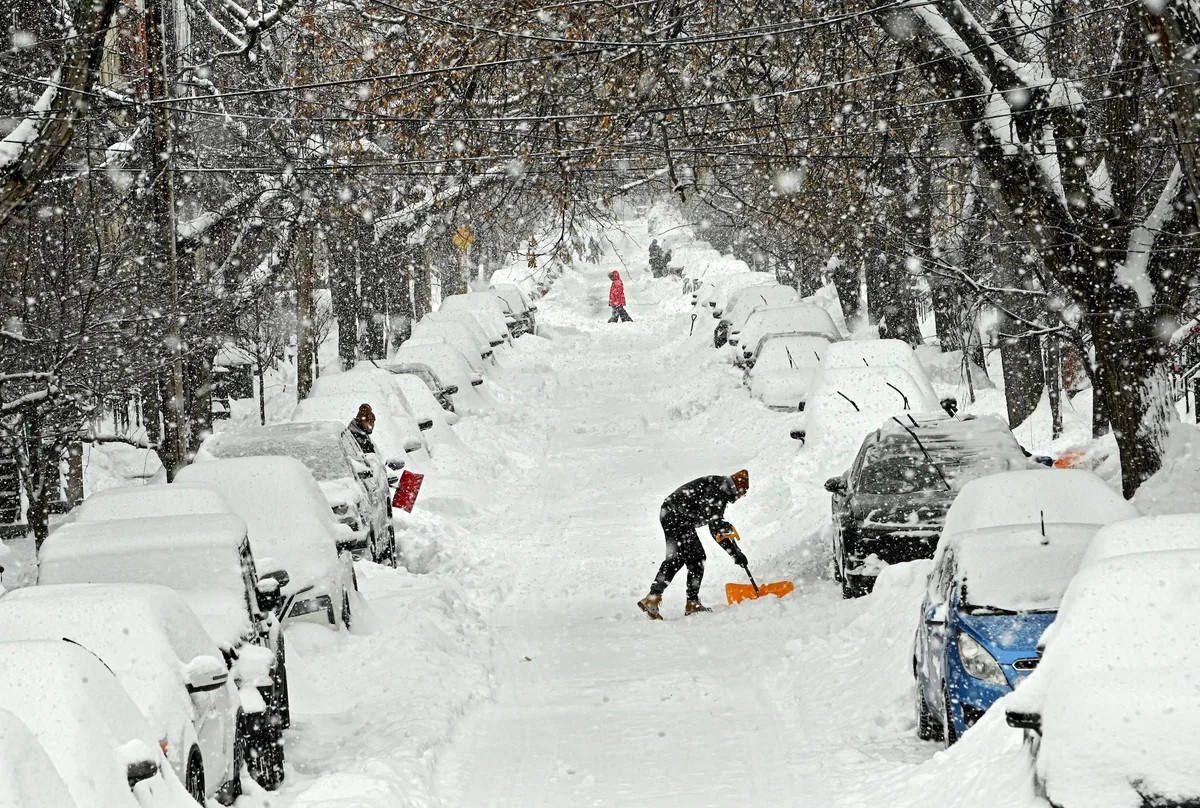
The recent winter storm that blanketed the eastern United States with heavy snow, sleet, and freezing rain was made significantly worse by human-caused climate change. Millions are still grappling with the aftermath, but new research indicates the storm delivered more frozen precipitation than it would have in past decades.
How Warming Fuels Heavier Snowfall
It seems counterintuitive, but a warming climate can indeed lead to heavier snowfall. The key lies in atmospheric moisture. For every 1°C (1.8°F) increase in temperature, the atmosphere holds roughly 7% more moisture. The storm hit in an atmosphere that has warmed by up to 5°C (9°F) compared to past decades, according to ClimaMeter. This translates to up to 20% more precipitation than the storm would have carried without human-induced warming.
The Paradox of Warming and Extreme Weather
This phenomenon highlights a critical paradox: as global temperatures rise, certain regions may experience more extreme winter weather, at least for a time. Areas prone to lake-effect snow are particularly vulnerable, as warming delays the freezing of large bodies of water, creating conditions for heavier, prolonged snowfall.
Implications for Infrastructure and Planning
The intensification of snowstorms due to climate change means that existing infrastructure and emergency planning standards – built on historical snowfall records – may be no longer adequate. As Haosu Tang of the University of Sheffield explains, current standards may underestimate the true risk. This underscores the urgent need to re-evaluate and adapt infrastructure to handle increasingly extreme weather events.
The intensification of winter storms is just one symptom of a rapidly changing climate. Ignoring this trend will only lead to more severe disruptions and greater costs in the future.
The research underscores that climate change isn’t just about rising temperatures; it’s about destabilizing weather patterns and increasing the frequency of extreme events, including those that bring record-breaking snowfall.