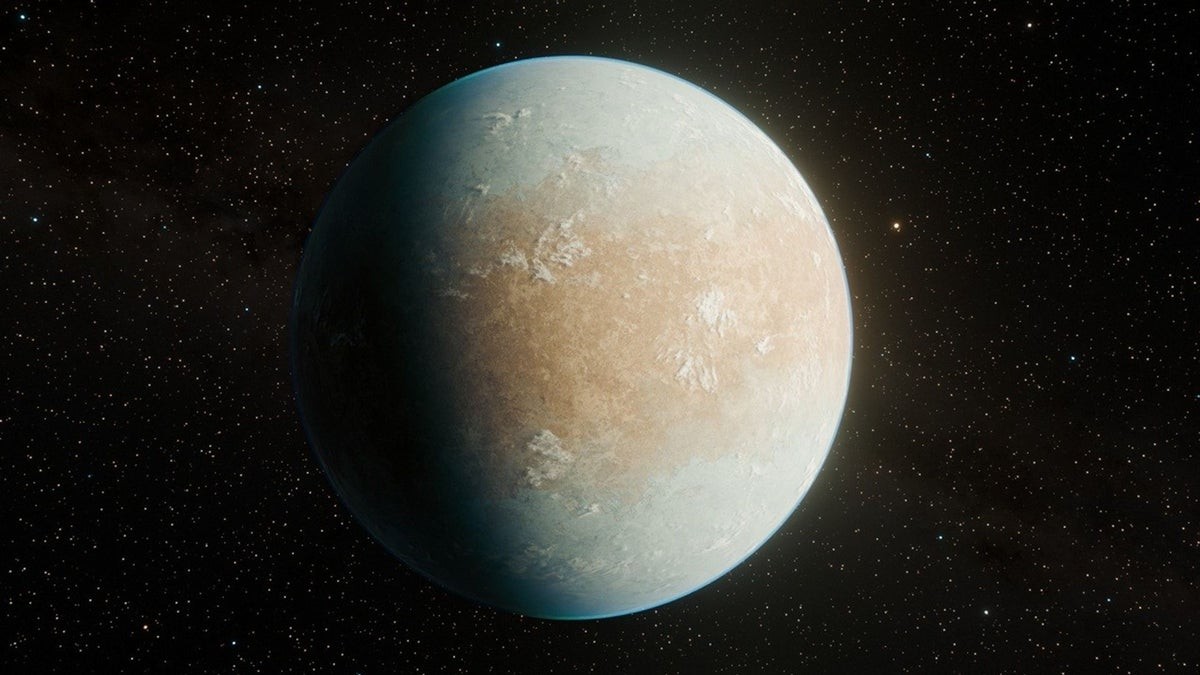
Astronomers have detected a potential Earth-like exoplanet orbiting a sun-similar star just 146 light-years away. The candidate, dubbed HD 137010 b, appears to be roughly Earth-sized and may have a year length comparable to our own. However, scientists caution that confirmation remains highly uncertain due to limited data.
The Signal and Its Challenges
The initial detection came from NASA’s Kepler Space Telescope in 2017: a single, distinct dimming of the star HD 137010 over 10 hours. This suggests a small, rocky planet passing in front of its star—a phenomenon known as transit. The signal was strong enough to warrant further investigation, but Kepler’s mission constraints ultimately hindered full verification.
The key issue is that only one transit has been observed. Kepler’s original design required three transits to confirm a planet, but the telescope failed before it could collect enough data. Later phases of the mission (K2) were shorter and less reliable for this type of search.
Why This Matters
The search for Earth-like planets is driven by the fundamental question of whether life exists elsewhere in the universe. Finding a potentially habitable world, even one unconfirmed, is significant because it narrows the search space.
- Habitability depends on distance from the star. HD 137010 b’s orbital period is currently estimated between 300 and 550 days, meaning it could be temperate or frozen depending on its exact distance.
- The lack of confirmation highlights a key limitation of exoplanet hunting. Single-transit detections are prone to false positives; other phenomena (starspots, dust clouds) can mimic planetary transits.
Future Prospects & Uncertainties
Currently, no other telescopes are scheduled to observe HD 137010 b in detail. Confirmation requires at least two more transits, but the chances are slim without dedicated follow-up.
Even if confirmed, this planet could still prove less hospitable than hoped. The star is slightly dimmer than our sun, meaning the planet may need a closer orbit to maintain liquid water – increasing the risk of tidal locking or intense radiation.
“Two transits is a maybe, but three transits is exactly what you want,” says astrophysicist Jessie Christiansen.
Despite the doubts, researchers remain intrigued. The clarity of the initial signal is unusually strong, suggesting that HD 137010 b may be a genuine planet after all. Future space telescopes with advanced imaging capabilities could eventually resolve the mystery, but for now, the existence of this possible Earth twin remains in the realm of “maybe.”