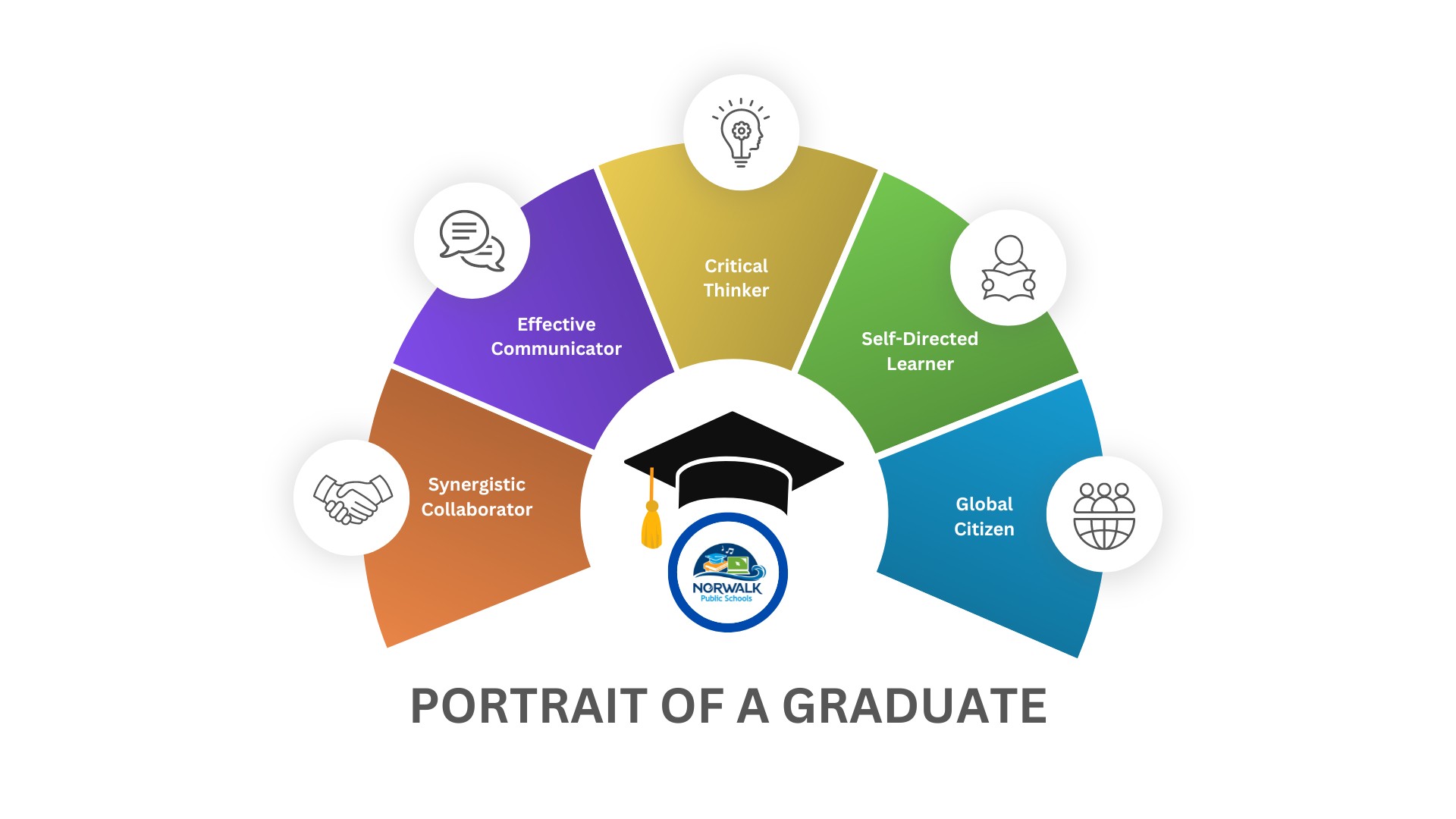
Norwalk Public Schools (NPS) in Connecticut is undergoing a deliberate transformation, centered around a “Portrait of a Graduate” (PoG) – a framework designed to equip students with the skills needed to thrive beyond traditional academics. This isn’t simply about adding new buzzwords to school mission statements; it’s a systemic overhaul, where collaboration, critical thinking, and adaptability are woven into the core of education.
The Promise and Pitfalls of Portraits of a Graduate
The idea of a PoG is gaining traction nationwide. Schools are realizing that rote memorization isn’t enough in today’s rapidly changing world. Instead, competencies like collaboration, global awareness, and self-direction are crucial. However, many districts adopt PoGs as superficial gestures, displaying posters without real implementation. As Tim Knowles of the Carnegie Foundation noted, these frameworks often lack measurable impact.
NPS recognized this risk and took a different approach. Rather than treating the PoG as a standalone initiative, the district embedded it directly into its operational structure.
A Systems-Level Approach: From Theory to Practice
The key to NPS’s strategy is systemic integration. The district intentionally placed PoG development and implementation under a dedicated Harvard Strategic Data Project Fellow, ensuring cross-department coordination. This wasn’t just about defining skills; it was about creating coherence across the entire district.
The district deliberately avoided rushing into assessment tools. Instead, they focused on identifying how students could actually practice the PoG competencies within existing systems. This led to a phased rollout, introducing one competency per year, starting with “critical thinker” in 2024-25. A standardized launch framework was developed to guide future competency releases.
Shared Responsibility: Aligning Goals and Professional Development
Norwalk didn’t rely on a single department to drive the PoG forward. Instead, it integrated the framework into board goals, assistant superintendent objectives, and school improvement plans. Professional learning for school leaders now explicitly aligns with PoG competencies, ensuring that educators are actively involved in its implementation.
This approach acknowledges a critical truth: lasting change requires collective ownership. By making the PoG a shared responsibility, NPS is reinforcing its role as a districtwide priority, rather than a siloed initiative.
Looking Ahead: A Foundation for Future Growth
Norwalk’s commitment to systemic thinking extends beyond current efforts. The PoG will serve as a foundational anchor in the district’s next strategic plan, ensuring that future competencies are introduced with the same phased, reflective approach. This continuous cycle of implementation and evaluation demonstrates a long-term vision for building a future-ready education system.
NPS’s approach provides a valuable case study for other districts considering PoG implementation. By prioritizing systems-level thinking and shared responsibility, Norwalk is proving that these frameworks can be more than just aspirational statements. They can be a catalyst for real, lasting change.