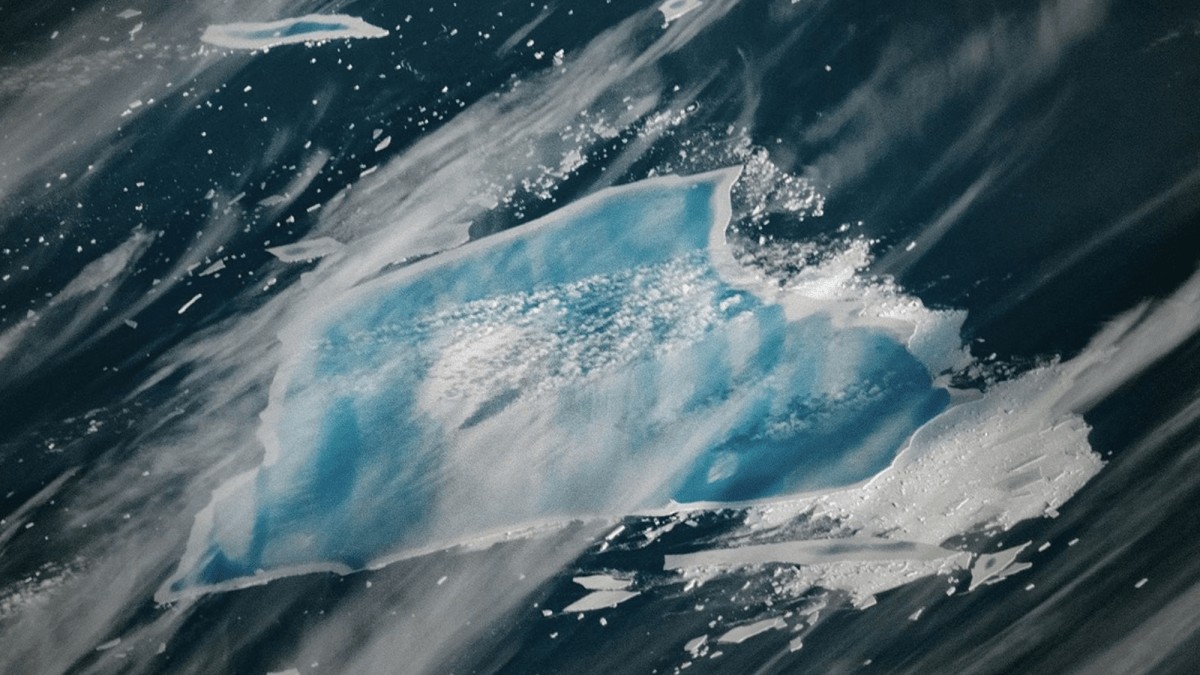
The world’s largest iceberg, A-23A, is showing dramatic signs of collapse as it drifts through warmer waters in the Southern Atlantic. Recent satellite imagery from NASA and NOAA reveal extensive blue meltwater pools across its surface, signaling an accelerated disintegration process. This event underscores the intensifying impact of climate change on Antarctic ice formations.
A History of Scale and Decay
A-23A broke off from Antarctica’s Filchner Ice Shelf in 1986, initially spanning over 15,000 square miles—nearly twice the size of Rhode Island. Although it has shrunk to approximately 456 square miles, still larger than New York City, its current state is critical. The iceberg underwent significant breakups in the Southern Hemisphere’s summer months (July–September 2025) and is now visibly deteriorating.
The Science Behind the Blue
The striking blue coloration isn’t just aesthetic; it’s evidence of structural failure. Accumulated meltwater weighs down the iceberg, forcing cracks to widen. Scientists have observed a “rampart-moat” pattern, where the edges bend upward as they melt, trapping the water. The blue striations visible within the ice are remnants of ancient bedrock drag marks, preserved for centuries despite erosion and melting—a testament to the ice’s former stability.
Imminent Collapse
Experts predict A-23A could fully disintegrate within days or weeks. The iceberg has even begun to “blow out” in places, where water pressure breaches the edges, causing further fragmentation. The Southern Hemisphere’s warmer summers accelerate this process, and climate change is only amplifying it.
A Warning Sign
The rapid decay of A-23A is not an isolated incident. Other massive icebergs—A-81, B22A, and D15A—remain along the Antarctic coast, poised to follow a similar trajectory. The fate of these giants highlights the urgent need to address rising global temperatures and their devastating effects on polar ice.
The disintegration of A-23A serves as a stark reminder of the accelerating pace of climate change and its direct consequences on Earth’s fragile ice systems. Without drastic action, this will become the new normal.