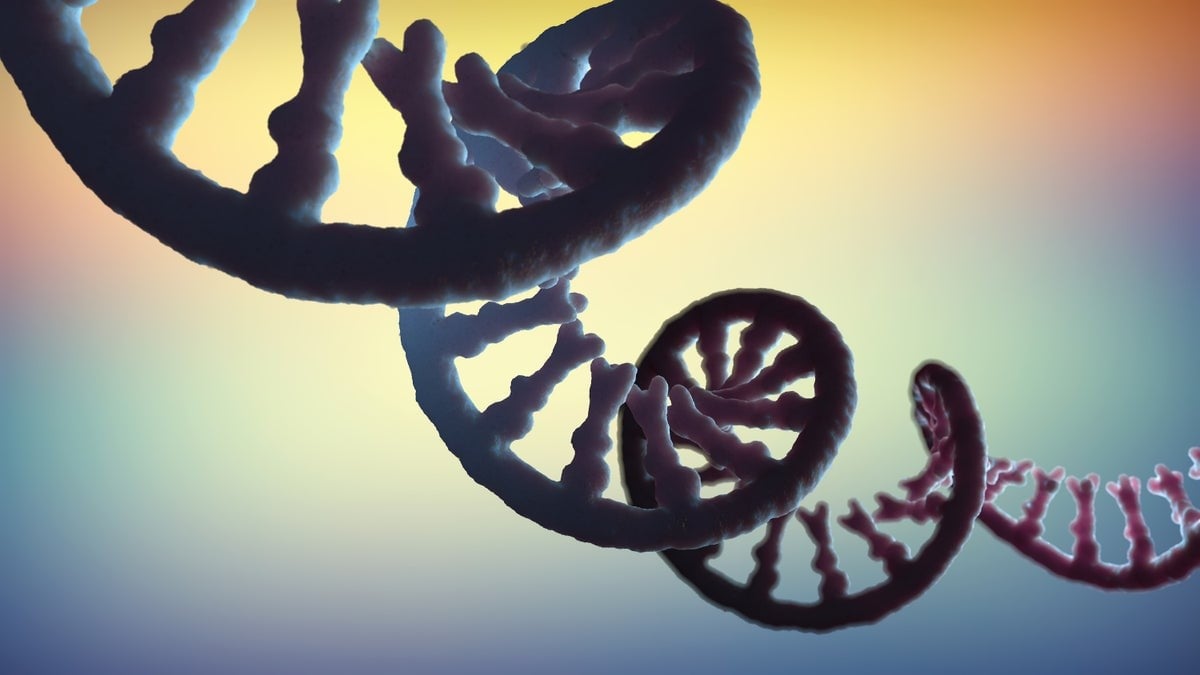
The question of how life began remains one of science’s greatest mysteries, but a new study suggests that RNA, a molecular cousin of DNA, may have formed readily on early Earth —and potentially on other planets too. This research, published in the Proceedings of the National Academy of Sciences USA, proposes a plausible pathway for the emergence of RNA under conditions prevalent billions of years ago, strengthening the argument that life’s ingredients might be common throughout the cosmos.
The Early Earth Recipe
Researchers led by Yuta Hirakawa recreated early Earth conditions in laboratory experiments. They mixed ribose sugar, nucleobases, phosphorus, and the mineral borate in water, then heated and dried the mixture—mimicking the impact-driven processes that shaped our planet. The results were striking: RNA-like molecules formed spontaneously.
This process hinges on the role of borate, previously thought to hinder life’s formation but now shown to stabilize sugars crucial for RNA synthesis. According to Hirakawa, “Borate is very important to stabilize the sugars, which are unstable molecules.” The team found that borate doesn’t just allow RNA formation; it facilitates it.
Impacts as Catalysts
The study suggests that massive impacts—like that of an asteroid the size of Vesta—were essential catalysts. These collisions delivered the necessary precursors and created the thermal cycles needed for RNA synthesis. This isn’t just speculation; samples from the asteroid Bennu, collected by NASA’s OSIRIS-REx mission, confirm the presence of ribose in primordial space material.
This implies that impact events are a universal feature of planet formation, meaning similar conditions could have existed elsewhere. Steven Benner, a co-author of the study, goes further: “The argument is: the impact history is universal…life is everywhere.”
Skepticism and Alternatives
Not all scientists agree. Lee Cronin, an expert in prebiotic chemistry, cautions that the experiment still relies on human intervention to acquire and mix components. He argues that demonstrating RNA formation under controlled conditions doesn’t prove it happens naturally on a cosmic scale.
Cronin also points out that RNA may not be the only path to life. Other molecules could serve similar functions, making the search for extraterrestrial life potentially far more diverse than previously imagined. The debate highlights the complexity of abiogenesis—the origin of life from non-living matter.
The Bigger Picture
The implications of this research are profound. If RNA can form readily under common planetary conditions, the universe might be teeming with life. The study suggests that the ingredients for life are not rare, but rather an intrinsic outcome of planetary processes. This shifts the focus from whether life exists elsewhere to how it manifests on other worlds.
The discovery of borate’s role is a particularly intriguing development, hinting that unexpected chemical pathways could unlock new possibilities in the search for life beyond Earth.
Ultimately, while skepticism remains, this study provides compelling evidence that the building blocks of life are not unique to our planet—a possibility that reshapes our understanding of the universe’s potential for habitability.