For centuries, the remnants of one of England’s oldest surviving shipwrecks lay undisturbed at the bottom of the English Channel – not because of its depth or the effects of time, but because it was dismissed as modern construction waste. The wreck, now known as the Mortar Wreck, dates back to around 1250 and represents a significant discovery in medieval maritime history.
Initial Misidentification and Subsequent Discovery
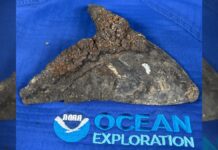
The story of the wreck’s retrieval is almost as remarkable as the wreck itself. As maritime archaeologist Tom Cousins of Bournemouth University recounts, local divers initially considered the site “rubbish,” believing it to be nothing more than discarded materials. It wasn’t until a proper inspection in 2019 that the truth was revealed: the debris was actually portions of the oldest known surviving medieval English ship hull.
The Ship and Its Cargo
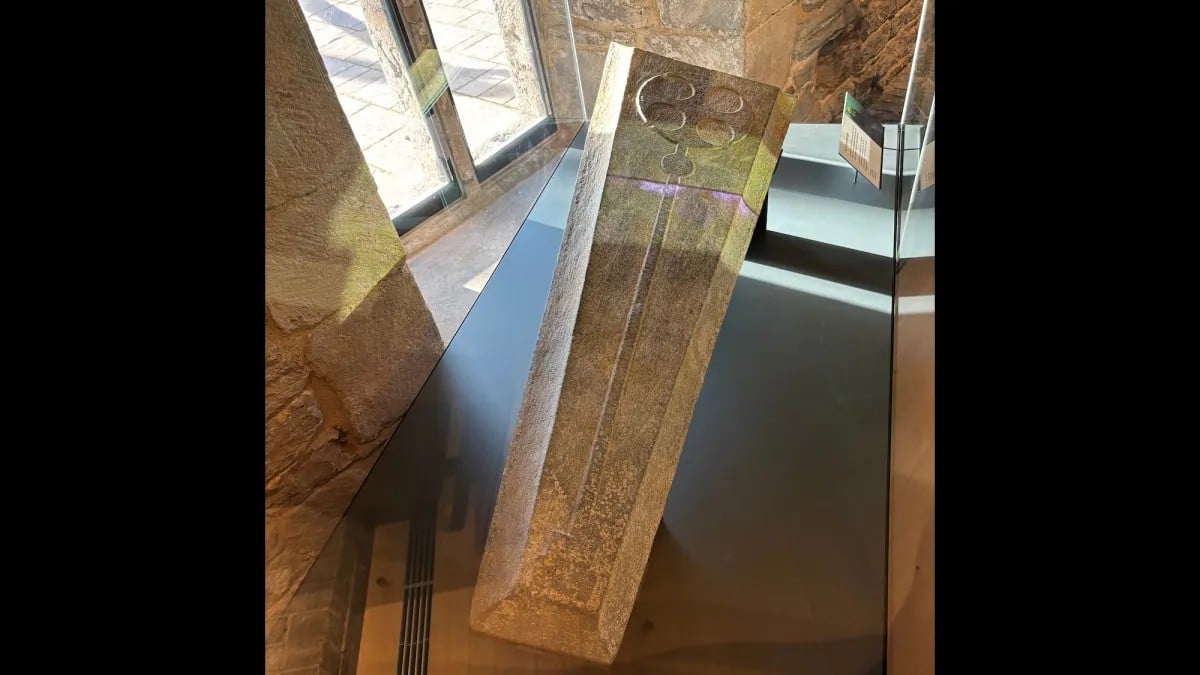
The vessel, constructed from Irish oak, was carrying a substantial load of stone tools designed for grinding food, as well as a pair of intricately carved grave slabs made from Purbeck stone. This stone, quarried exclusively from the Isle of Purbeck in southern England since Roman times, was highly prized by medieval architects for its ability to be polished to resemble marble. Examples of Purbeck stone have been found as far away as Denmark, indicating a widespread trade network.
The Demise of the Mortar Wreck
Cousins believes the ship likely sank under the weight of its cargo—approximately 29.5 tons of stone. The vessel, a reinforced version of the earlier Viking longships, may have been overloaded, leading to structural failure. The intense demand for Purbeck stone during the 13th century, the period when church and cathedral construction boomed, probably drove the ship to carry a dangerous amount of cargo.
Artifacts on Display
Today, recovered artifacts from the Mortar Wreck, including one of the ornate grave slabs resembling the tomb of Archbishop Stephen Langton, are on display at the Poole Museum. The exhibit aims to educate visitors about the medieval trade in Purbeck stone and the seafaring practices of the time.
The Mortar Wreck’s story underscores how easily historical treasures can be overlooked, mistaken for modern waste. Its recovery highlights the importance of thorough archaeological investigation, even in seemingly unremarkable locations.