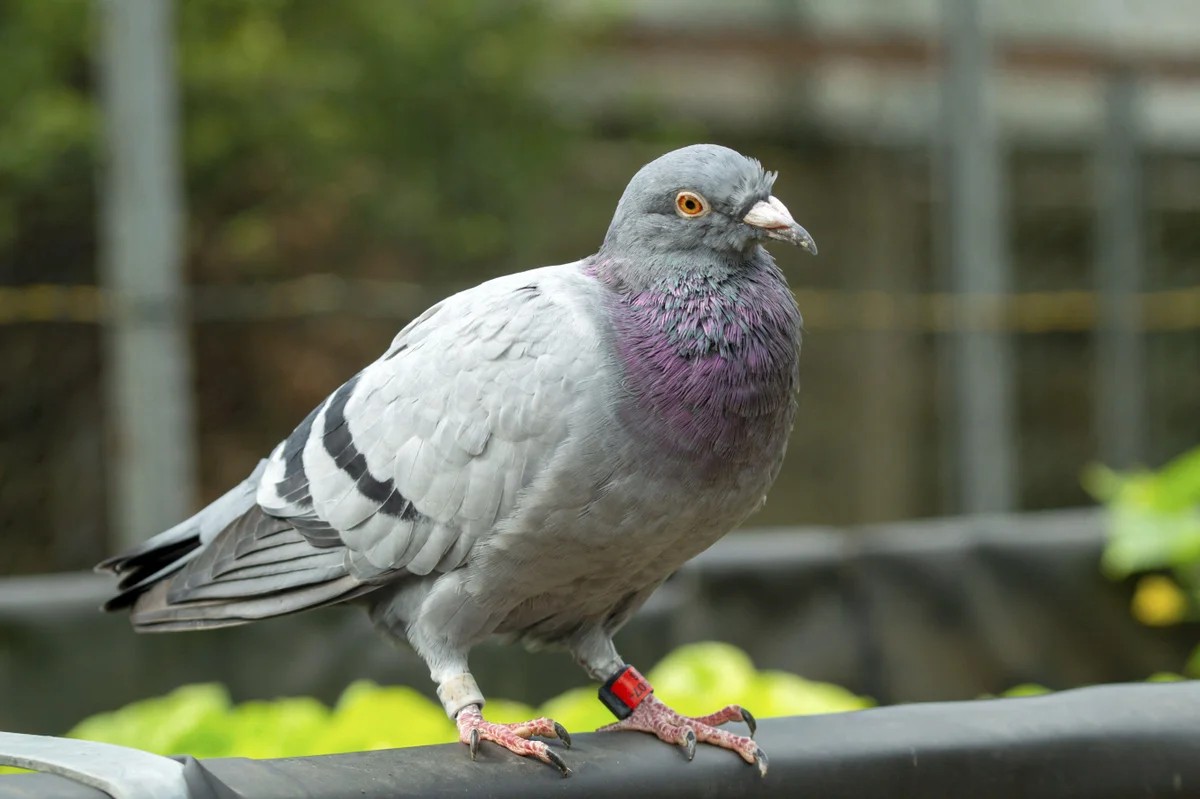
A new theory thinks it solved a puzzle that has bothered biologists for decades. How do homing pigeons read Earth’s magnetic field? The answer: their livers. Specifically, immune cells inside them that hold onto iron.
It’s bold. It’s new. And most experts think it’s probably wrong.
The study came out today in Science. It claims pigeons have macrophages in their livers that are packed with iron. When the researchers killed these specific cells using a drug, the birds got hopelessly lost on cloudy days.
Martin Wikelski is one of the lead authors. He’s optimistic. He works at the Max Planck Institute in Germany. He believes this fits all the current evidence.
“What we think we found here fits all the evidence that is out there.”
He thinks this might not just be pigeons. Bees, bats, maybe even mammals. If true it changes everything we know about navigation in the animal kingdom.
Other scientists aren’t impressed. Joe Kirschvink from Caltech has studied magnetic sensing in animals for a long time. He says he’s not convinced. He’s actually surprised this paper made it past the reviewers at Science.
The mechanism rests on macrophages. Think of them as the body’s vacuum cleaners. When red blood cells die they leave behind iron. The iron can cause inflammation if it sits there too long. Macrophages clean it up. They store the iron until the body recycles it back into the bone marrow.
In humans these iron-heavy cells hang out mostly in the spleen. Pigeons are different. The team used a strong magnet—much stronger than the Earth’s natural field—to scan the birds. They found the livers were full of magnetic macrophages. These cells were sitting right next to nerve endings. That proximity suggests a way for the brain to get a signal.
To test if those cells mattered for navigation they took a fleet of trained pigeons. These birds fly home to Radolfzell from 20 kilometers away. Easy work. They gave the pigeons a drug to kill the liver macrophages. Then they let them fly on a cloudy day. No sun. No visual cues. Just magnetic field.
The birds failed. Clivia Lisowski says it was crazy. They flew in all directions. They had no idea where to go.
Here’s the catch though.
The paper doesn’t explain how. Earth’s magnetic field is weak. Really weak. The iron in macrophages usually doesn’t react much to fields that weak. How would these cells tell the bird it’s facing north versus south?
Lisowski admits they don’t know. She says any answer right now is just speculation. They have a hypothesis but the mechanics are missing.
This creates a problem. A big one.
In 2012 a famous study in Nature debunked a similar idea about pigeons having magnetite receptors in their beaks. It turned out those weren’t compass neurons at all. They were macrophages. And previous research suggests that kind of iron won’t work for sensing the Earth’s magnetic field.
The current team tries to dodge this with the term “superparamagnetism.” It’s a quantum effect that makes iron react stronger to magnets. It’s plausible in theory. In a lab magnet sure. In the real world? Maybe.
Carl Meyer studies sharks and their navigation skills. He says there’s no evidence this would allow a cell to signal a neuron effectively. He remains skeptical. Mostly because there have been too many “victories” in this field that later fell apart.
“The specific mechanisms by which organisms detect… magnetic fields is one of the greatest remaining mysteries in biology.”
Meyer isn’t the only one. Kirschvink says the physics models for these kinds of receptors basically hit a dead end years ago. Many people tried. None of them proved it.
Then there is Pascal Malkemper. He studies mole rats. He finds the navigation results interesting. Killing macrophages broke the navigation. That’s a strong correlation.
But pigeons don’t just use magnetic fields. They use sight. Smell. Landmarks.
Malkemper suspects the magnetic sense is the bird’s backup plan. A last resort. If you remove it the bird should still navigate using other cues. But wait.
The study notes something odd. If you treat the birds with the drug on a sunny day they can find home. The sun helps them bypass the broken magnetic compass. Kirschvink points out that motivation changes on sunny days too.
Malkemper wonders if the drug itself made the birds sick. Or stressed. If they are agitated maybe they can’t focus on any cue. He calls the evidence correlational. Not causal.
The authors tried to fix this by testing on foggy days. Few landmarks. Few smells to distract them. Still no proof of cause.
So we are stuck again.
Wikelski wants us to believe the liver is a compass. The data is suggestive. The birds got lost. That part is real. The “how” is entirely theoretical. The physics looks shaky to many experts. The chemistry of iron storage is complex and often misunderstood.
We might be looking in the right place. We might not.
Malkemper thinks it’s worth looking anyway. We checked the eye. We checked the inner ear. Now we check the liver. Science is slow. It corrects itself.
For now the pigeons just fly. And we don’t know why they turn left when we tell them to.